

A buyer’s inspection report doesn’t automatically require you to repair every condition it identifies. A California home may not need a full renovation before it goes on the market. Deciding what repairs are required before selling a home in California starts with separating serious defects and safety concerns from cosmetic updates and normal wear.
It’s understandable to wonder whether a major repair will protect your sale or simply add time and expense. Roof, plumbing, electrical, and HVAC problems, pest concerns, and visible water damage are common priorities to weigh, especially when they could affect a buyer’s confidence or financing. Selling as-is may be another option, but it doesn’t remove the need to disclose known material facts about the property.
This guide explains how major defects can shape a sale, what to consider after an inspection, and how to compare repair costs with an as-is approach. You’ll also learn why the right choice depends on the home’s condition, your selling goals, and the terms of a buyer’s offer.
Key Takeaways
- A buyer’s inspection report doesn’t automatically require you to fix every issue; focus first on serious defects and safety concerns.
- Roof, foundation, electrical, and plumbing problems can influence buyer confidence, financing, and negotiations.
- Compare the likely benefit of a repair with its cost, the home’s condition, and your selling priorities before committing to major work.
- Selling as-is can be an option, but it doesn’t remove the need to disclose known material facts about the property.
- Clear pricing and a thoughtful presentation can help position a home that needs work for buyers willing to take on repairs.
1. What Repairs Are Sellers Required to Make After a Home Inspection?
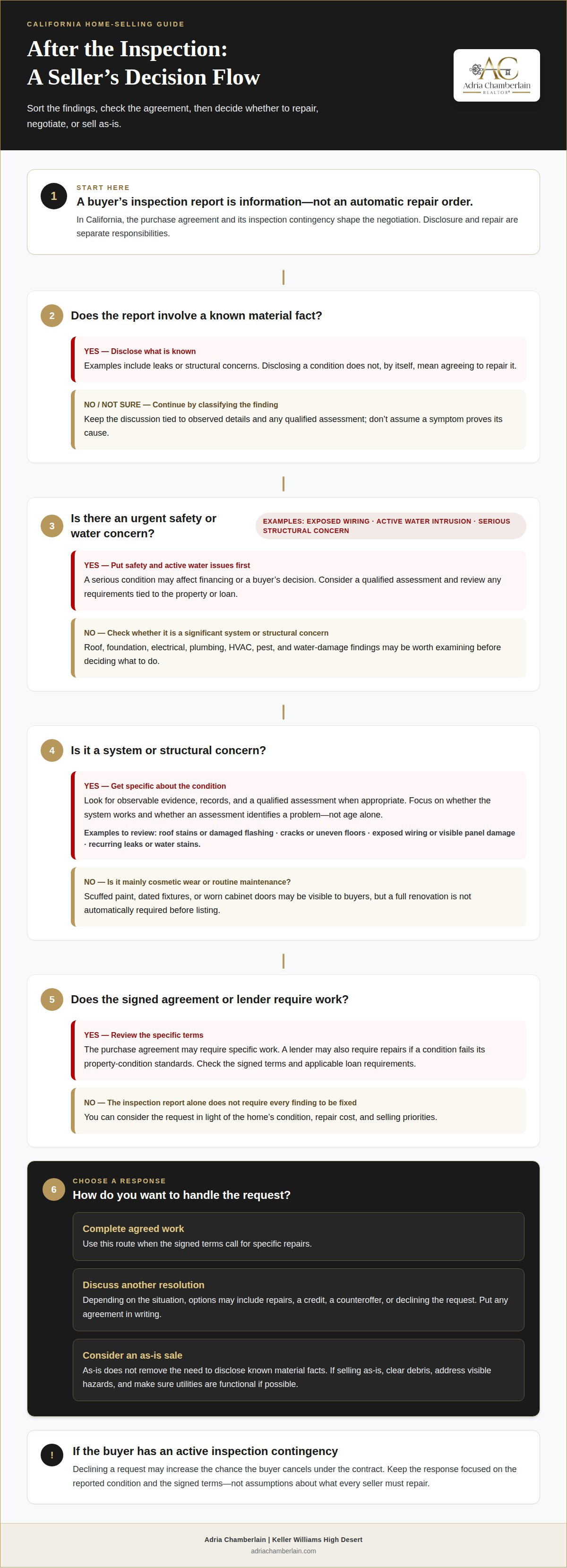
A buyer’s inspection report documents visible conditions, concerns, and maintenance issues for that buyer. It doesn’t automatically require you to fix every item before closing. In California, the purchase agreement and its inspection contingency shape the negotiation. Separately, sellers generally need to disclose known material facts, including problems such as leaks or structural concerns. Disclosure and repair are different responsibilities.
So, what repairs are legally required before selling a home in California? A buyer’s report alone doesn’t create a duty to repair every finding. The agreement may require specific work, and a lender may condition funding on repairs that meet its property-condition standards. Review the signed terms to understand what the parties have agreed to complete.
Smoke-alarm and carbon-monoxide-detector requirements depend on the home and applicable rules. Treat a missing or nonworking detector as a safety concern, and address requirements that apply to the property. A known carbon-monoxide detector deficiency may also affect financing or a buyer’s decision to proceed.
California lenders or appraisers don’t necessarily require every visible flaw to be repaired. A lender may require work when a property condition fails its funding standards. Safety deficiencies, such as exposed wiring, active water intrusion, or serious structural concerns, may affect financing or a buyer’s decision. An appraiser’s observations can raise property concerns, but lender requirements and loan terms determine whether repairs are needed.
A pre-listing inspection can help identify potential deal-breakers before buyers arrange their own inspections. It can flag roof, plumbing, electrical, HVAC, pest, or water-damage concerns while you still have time to consider options. Rather than replacing a system based on age alone, focus on whether it operates properly and whether a qualified assessment identifies a problem. You can then decide which work to complete, disclose, or discuss during negotiations.
Before listing, sort findings into urgent safety or water issues, significant system concerns, and cosmetic wear. Clear debris, address visible hazards, and make sure utilities are functional if you plan to sell as-is. These steps can help buyers assess the home without requiring a major renovation. A listing agent can help organize inspection requests and compare proposed repairs with credits, a counteroffer, or declining the request.
If a buyer has an active inspection contingency, declining a request may increase the chance that the buyer cancels under the contract. A clear response helps: identify the specific finding, decide whether to offer work or another resolution, and put any agreement in writing. This keeps negotiations focused on the reported condition and the transaction’s signed terms, rather than assumptions about what every seller must repair.
2. Roof, foundation, electrical, and plumbing issues
For a roof, focus on evidence of current failure: water stains, damp attic materials, damaged flashing, or missing shingles. A visible stain may be old, so its location and any repair records can help explain the condition. Buyers often want to understand whether a concern is active, what work was done, and whether the source was addressed. Keep the discussion tied to observable details, not assumptions about the roof’s remaining life.
Foundation and structural concerns call for a clear description of the observed condition. Cracks, sticking doors, or uneven floors can prompt questions, but one symptom alone does not establish the cause. A qualified contractor can assess the specific concern and describe the scope of any recommended work. That information helps distinguish a cosmetic crack from a condition that could affect the structure or a buyer’s decision.
Electrical and plumbing issues deserve practical attention because they involve essential systems. Examples include exposed wiring, a panel that shows visible damage, recurring leaks, or water stains beneath a sink. Don’t treat every older component as a defect solely because it isn’t new. Focus on whether it functions, whether there is a known issue, and whether an assessment identifies a safety or performance concern.
Are California sellers required to fix earthquake safety issues before selling? A home isn’t automatically required to meet current building codes just because it was built under earlier codes. Whether a particular safety issue requires work depends on the property and applicable requirements. Disclose known structural concerns, and distinguish that obligation from agreeing to complete repairs.
What about homes with unreinforced masonry or other hazards? There is no single retrofit answer that applies to every California property based on the information available here. Requirements can depend on the building and applicable local rules. For a specific home, identify the hazard and any written notice or requirement tied to that property before deciding how it affects the sale.
Outstanding municipal matters can also complicate a listing. Before marketing a home, gather records for open permits, correction notices, or work that may have required approval. A homeowners association may have separate records or requirements for properties it governs. For example, an addition without readily available permit paperwork may raise questions even if the home’s roof and plumbing appear sound.
Cosmetic wear is different from a system or structural concern. Scuffed paint, dated fixtures, or worn cabinet doors may be visible during a showing without requiring a full renovation. In Adelanto, Barstow, Helendale/Silver Lakes, or Phelan, as in other High Desert communities, describe the home’s actual condition rather than implying that cosmetic improvements resolve an underlying defect. Clear records and specific descriptions help buyers assess the property and keep real estate discussions grounded in facts.
3. Seller repair obligations after a home inspection
An inspection report can prompt a request, but it doesn’t decide who pays. In a California home sale, the purchase agreement and its inspection contingency guide the negotiation, subject to applicable requirements. A buyer with an active contingency may be able to request repairs, ask for a credit, renegotiate, or cancel, depending on the contract. The seller can accept, counter, offer a credit, or decline.
Are sellers required to repair pest, termite, or dry rot damage in California? Those findings don’t automatically mean the seller must pay for treatment or repairs. The agreement and any applicable lender conditions affect the parties’ choices. Known property issues remain relevant to disclosure, whether or not the seller agrees to perform the work.
Who pays for required repairs in a California home sale, and can buyers waive them? The contract determines responsibility for work the parties agree to complete, or for a negotiated credit. A buyer may waive an inspection contingency if the contract allows, but that doesn’t necessarily remove separate lender requirements. The written terms and loan conditions both matter.
Before work starts, put any inspection-related agreement in a signed addendum. Identify the specific repair, who will arrange or pay for it, and the agreed completion terms. This helps prevent a general phrase such as “fix plumbing” from creating different expectations for the seller and buyer. Sellers generally aren’t required to use the buyer’s preferred contractor or accept an unreasonable repair schedule.
A credit can be a practical alternative when contractor scheduling or closing deadlines make repairs difficult. It may also reduce the chance of a disagreement about workmanship shortly before closing. The parties should spell out the credit and its terms in the transaction documents. Document any change to the agreement rather than leaving it to a verbal understanding.
An as-is sale may suit a seller handling an estate or trust, seeking a simpler process, or marketing to investors or remodel buyers. Buyers may still account for repair costs and risk in their offers, and an active inspection contingency can shape their next steps. As-is describes the seller’s repair position; it doesn’t automatically settle every negotiation point.
Sellers should also account for closing expenses when comparing offers. California sale costs may include real estate commissions, escrow and title fees, city- and county-specific transfer taxes, and prorated property taxes and HOA fees. These expenses, mortgage balances, and any agreed repair credit all affect net proceeds. A clear estimate of each item helps sellers compare the practical outcome of repair work, a credit, or no agreed repair.
4. Estimating net proceeds and repair costs
Start with a simple comparison: estimate the likely sale proceeds, subtract selling expenses and mortgage balances, then subtract planned repairs. The remainder is your estimated net proceeds. For example, a seller weighing a roof project can compare its written scope and cost with the likely effect of listing without that work. This keeps the decision tied to the household’s priorities, not just the appearance of a newly renovated home.
Repair budgets vary by project. A working older appliance or dated finish may not justify replacement. Focus first on structural problems, active leaks, or safety issues that could shape buyer negotiations.
Return on investment is not the same as getting every dollar back at resale. A National Association of Realtors report says a new roof replacement recovers roughly 100% of its cost. Other reported estimates place a major midrange kitchen remodel’s cost recovery at about 49.5%. Those figures offer context, not a guarantee for a particular home. Local comparable properties, the project’s condition, and buyers’ expectations all influence how an upgrade affects appeal.
Home preparation can also include smaller items that make a showing feel cared for. These modest improvements may be easier to budget than a full kitchen or bathroom remodel, which is generally nonessential before selling.
Before approving work, divide the estimate into labor, materials, and additional fees such as equipment rental or disposal. Keep invoices and, where possible, before-and-after photos. Records can also help explain a repair during disclosure and buyer review.
Finally, account for timing. A major repair can delay the listing while contractors complete the work, whereas a sale as-is may shift attention toward price and condition. Compare the likely project timeline with your moving plans and the home’s showing readiness. If a structural repair would use funds needed for your next step, weigh that constraint alongside buyer appeal and the possibility of negotiated terms.
A practical estimate has three columns: repair now, offer a credit or adjust the price, and sell without completing the work. Compare each option’s projected proceeds, time demands, and effect on buyer confidence. For homeowners in Apple Valley or Hesperia, the right balance may differ from a nearby property because condition, comparable sales, and buyer interest vary by location.
5. Meaning of selling a home as is in California
In California, selling a home as-is means the seller doesn’t agree to make repairs or improvements before closing. It does not mean the home is offered without describing known problems. A buyer may still inspect the property, and the purchase agreement still shapes what happens after inspection. The practical takeaway: as-is sets a repair expectation, not a disclosure exemption.
California’s Transfer Disclosure Statement and Seller Property Questionnaire remain applicable in an as-is sale. Sellers still need to disclose known material facts about the property. That can include issues such as a roof leak, prior water damage, or a structural concern. A form doesn’t replace clear, accurate information about what you know; missing repair paperwork doesn’t make a known issue disappear.
An as-is listing can suit a seller who wants to avoid coordinating work, including someone handling an estate or trust. It may also appeal to investors or remodel buyers willing to take on repairs. A buyer could consider a home with deferred maintenance if the condition and price fit their plans. Conventional and renovation financing may be options for some buyers, but loan conditions can still affect the transaction.
Price matters. The price of an as-is home depends on factors such as its condition, location, and the terms of the sale. Compare the property with similar homes in similar condition, rather than renovated homes alone. If a buyer’s inspection reveals an issue, the buyer may still request a price reduction, even when the seller isn’t agreeing to make repairs.
Before choosing this route, separate work you won’t complete from safety or access concerns that could prevent buyers from evaluating the home. Removing debris, addressing visible hazards, and keeping utilities functional can make the property easier to view without undertaking major improvements. These steps don’t turn an as-is home into a renovated one; they help buyers understand its condition during showings.
As-is also doesn’t erase negotiated terms. A buyer with an active inspection contingency may have options under the purchase agreement, while a lender may require certain repairs as a condition of funding. If the parties agree to a credit or specific work, put that agreement in writing. The contract, property condition, and financing requirements all influence the final outcome.
For a clear decision, compare two paths: the expected proceeds after repairs, and the likely offer and terms for an as-is sale. Include repair timing, disclosure details, and the types of buyers each approach may attract. For help weighing an as-is listing against pre-sale work, discuss your home-selling options with a local real estate professional.
Adria Chamberlain | Keller Williams High Desert: First-Time Homebuyer Representation
Adria Chamberlain | Keller Williams High Desert can help sellers weigh repair decisions alongside the next steps in a home sale. A Home Valuation & Comparative Market Analysis (CMA) provides a basis for considering the property’s condition and pricing, while Residential Property Listing Services support the listing process. If you’re deciding whether to repair, adjust expectations, or sell as-is, these services can help frame your choices around your goals. First-Time Homebuyer Representation is available for buyers preparing to purchase, including those considering a home that needs work. The right conversation depends on whether you’re selling, buying, or planning both moves together. For guidance with your home sale or a future purchase, contact Adria Chamberlain | Keller Williams High Desert.
Make your next move with a clear plan
Before choosing a repair path, decide what matters most for your next move: your available time, the condition you’re comfortable presenting, and the flexibility you need from the sale. A short written plan can help keep decisions focused when new information comes up. It can also make it easier to explain your priorities during conversations about the property.
Deciding what repairs are required before selling a home in California is only one part of preparing for a sale. You also need an approach that fits your circumstances and the home’s likely buyers. A local perspective can help you consider how to position the property without losing sight of your personal goals.
If you’re ready to talk through your situation, contact Adria Chamberlain | Keller Williams High Desert for guidance on your next step. A thoughtful plan can make the process feel more manageable, and you can move forward at a pace that works for you.
Frequently Asked Questions
Can You Sell a House in Bad Condition in California?
Yes, a California home can be sold in poor condition, including to buyers willing to take on repairs. A home with major deferred maintenance may attract a different buyer pool than a renovated property, and buyers may account for repair costs in their offers. For example, an investor or remodel buyer may assess a damaged roof differently from a buyer seeking a move-in-ready home.
Should You Fix Up Your House Before Selling?
Not necessarily. Decide project by project, starting with conditions that could raise safety concerns or make the home difficult to evaluate. Then compare the likely expense and time for each repair with the home’s presentation and your selling plans. Replacing dated but functional cabinets, for example, is a different decision from addressing an active leak. A focused plan can help you avoid improvements that don’t match your priorities.
What Repairs Are Sellers Required to Make After a Home Inspection?
A buyer’s inspection report doesn’t automatically make every listed repair the seller’s responsibility. The purchase agreement and any active inspection contingency guide the parties’ options. If a report identifies a loose handrail and a roof leak, the buyer could raise both, but the seller’s response can differ for each. Read any repair request alongside the signed contract, and document agreed work in writing before it starts.
Are There Benefits to Selling Without Making Repairs?
Yes. Selling without completing repairs can avoid arranging contractor visits and waiting for work to finish before listing. It may suit a seller who needs to simplify an estate sale or would rather not manage a renovation. The trade-off is that buyers may factor the home’s condition and repair risk into their offers. A realistic comparison should consider the property’s condition, buyer interest, and your timing needs.
Are There Health Hazards When Selling an Older Property in California?
Older homes can have conditions that affect safety or raise environmental concerns, such as exposed wiring, water intrusion, or structural problems. A lead-based paint disclosure may also apply to older homes. Focus on known concerns rather than assuming every older property has the same hazards. If an issue is known, include it in the appropriate disclosure process and keep available records about past work or maintenance.
Do I Have to Disclose All Known Defects?
California sellers should disclose known material facts about a property in accordance with applicable disclosure requirements. The Transfer Disclosure Statement and Seller Property Questionnaire remain relevant in an as-is sale. If you no longer have an invoice for work, records may still be available from the contractor or service provider. Keep descriptions factual: note what was repaired, roughly where the work occurred, and any records you can provide.
Do I Have to Make Repairs or Clean the House Out?
You don’t automatically have to renovate before selling, but the purchase agreement sets expectations for the property and anything included in the sale. Clarify which appliances, fixtures, or other items stay, and address removal of unwanted belongings before possession changes hands. Even if you’re selling as-is, clearing paths, removing loose debris, and keeping essential utilities functional can make it easier for buyers to view the home.
How Can You Ensure a Smooth Transaction?
Keep the paperwork and decisions organized from listing through closing. Gather repair invoices, permits for work that required them, and disclosure documents; then save signed addenda for any inspection-related agreement. In Apple Valley, Victorville, Hesperia, or another High Desert community, clear communication about the property’s condition can help prevent misunderstandings. Track agreed tasks and deadlines in one place so each party can see what remains before closing.


