

Moving from Orange County to Apple Valley, California, means weighing more than a change of address: you’ll want to compare the homes available, what your budget can support, and how daily life will feel in the High Desert. Apple Valley had an estimated population of 75,247 as of July 1, 2025, according to the U.S. Census Bureau, offering a useful sense of the community you’re considering.
It’s natural to wonder whether moving from Orange County to Apple Valley CA will bring the space and affordability you want without making work, family visits, or everyday errands harder. The right fit depends on the home, your priorities, and where you need to travel, so consider the full picture rather than housing costs alone.
This guide explains what to consider when comparing Apple Valley homes and affordability with Orange County, along with the area’s sunny, dry climate and commuting routes, including the I-15. You’ll also see why some High Desert residents continue to commute to Rancho, Ontario, or Los Angeles, and which location tradeoffs to think through before making your move.
Key Takeaways
- Compare the home styles and space you want with what fits your budget before choosing a neighborhood.
- Account for Apple Valley’s sunny, dry climate when considering outdoor space and everyday comfort.
- Map your regular destinations and weigh the I-15 commute against the location benefits of living in the High Desert.
- Look beyond the home’s purchase price by considering how the move may affect your routine, travel, and household costs.
- Use local real estate guidance to explore Apple Valley properties and plan a move that fits your needs.
Apple Valley's location in San Bernardino County
Apple Valley is a San Bernardino County community in California’s High Desert. The U.S. Census Bureau estimated its population at 75,247 residents on July 1, 2025. That figure offers a current snapshot of the town’s size, but it doesn’t describe every area or housing option. For someone leaving Orange County, the practical question is how Apple Valley’s location fits daily destinations, household routines, and plans for a new home.
Think about location in terms of the places you’ll visit regularly, not just a map pin. A home may feel convenient if it suits your usual errands, family visits, and work arrangements. List the destinations that matter most, then compare how each Apple Valley property fits your routine. Someone with regular plans in Victorville may weigh location differently from a household whose priorities center on Apple Valley.
Apple Valley is part of a network of High Desert communities. Victorville and Hesperia are familiar nearby options for people comparing locations across the region. Adelanto, Barstow, Helendale, including Silver Lakes, and Phelan may also enter the conversation, depending on work, family, or lifestyle priorities. These communities aren’t interchangeable. Focus on the places you need to reach and the home features you value.
A simple location review can keep your move from becoming an address-only decision:
- List regular destinations: Include work, school, healthcare, family, and errands by name.
- Group your priorities: Separate weekly needs from occasional trips, such as visiting relatives in Orange County.
- Compare candidate homes: Note how each location supports the destinations that matter most.
- Discuss tradeoffs: Decide which routines can change and which need to stay convenient.
This process connects Apple Valley’s county location to the move you’re actually planning. If work or family life still involves Orange County, include those trips alongside local errands. If your plans center on Victorville, Hesperia, or another High Desert community, use those destinations to guide your search. Population estimates provide context, but your routine is a more personal measure of fit. Moving from Orange County to Apple Valley works best as a considered location choice, not simply a change between two points on a map.
Housing affordability
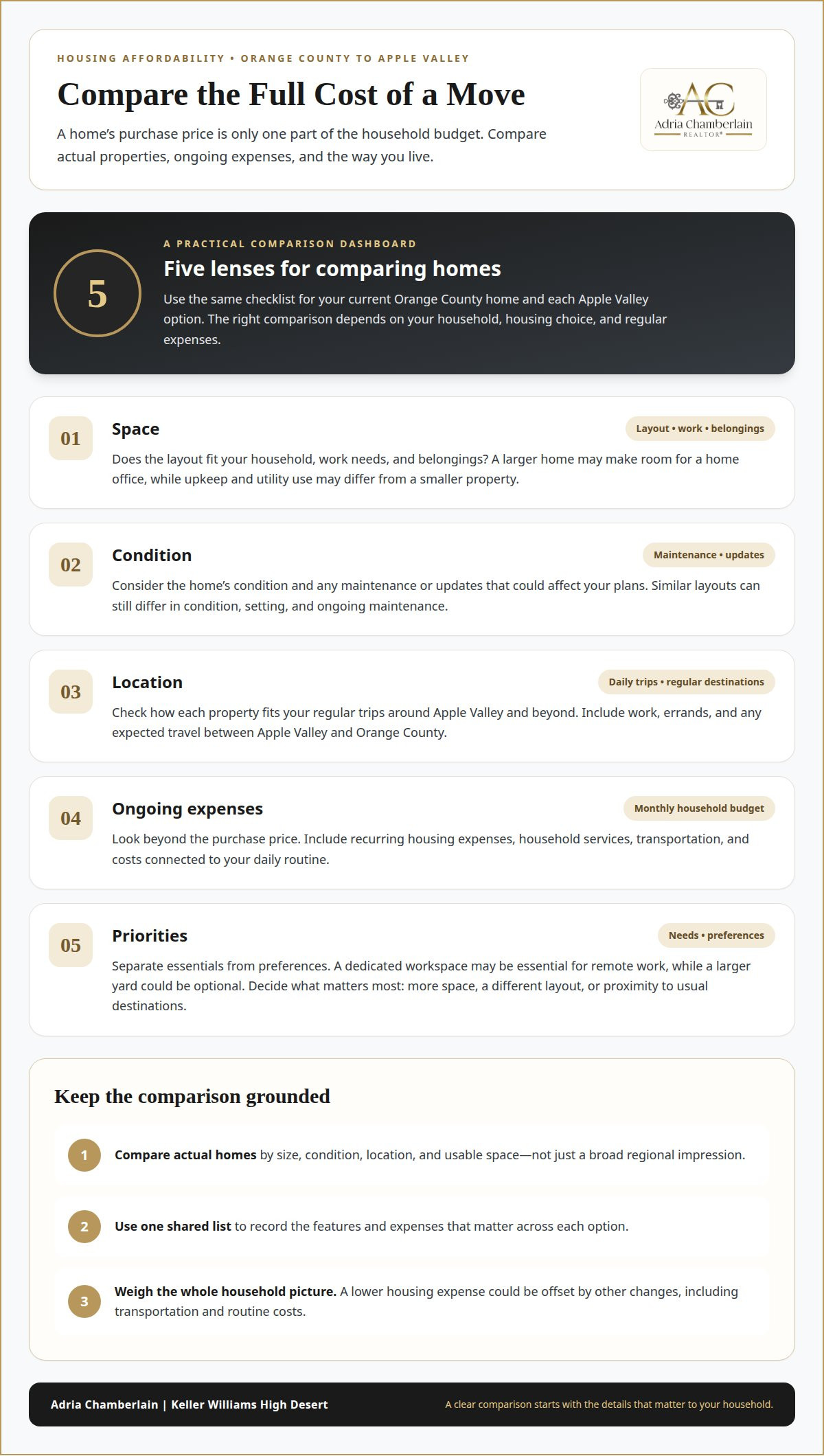
Apple Valley’s cost of living compared with Orange County depends on your household, housing choice, and regular expenses. Don’t assume a move automatically lowers your total costs. Compare specific homes and monthly obligations in both places.
Start with housing, because the home you choose shapes several parts of your budget. Compare properties by size, condition, location, and usable space rather than relying on a broad regional impression. A larger home, for example, may offer room for a home office, but upkeep and utility use may differ from those of a smaller property. The purchase price is only one part of the comparison.
Build a side-by-side budget for your current Orange County home and an Apple Valley option. Include recurring housing expenses, household services, transportation, and costs tied to your daily routine. If you expect regular trips between Apple Valley and Orange County, include them in your planning. A lower housing expense could be offset by other changes, so compare the full household picture.
For each home you’re considering, organize the comparison around practical questions:
- Space: Does the layout fit your household, work needs, and belongings?
- Condition: What maintenance or updates might affect your plans?
- Location: How does the property fit your regular trips around Apple Valley and beyond?
- Ongoing expenses: Which recurring costs belong in your monthly household budget?
- Priorities: Would you rather prioritize more space, a different layout, or proximity to your usual destinations?
Next, separate needs from preferences. A dedicated workspace may be essential for remote work, while a larger yard could be optional. This distinction helps you compare an Apple Valley property with your current Orange County home without treating every difference as a saving or added cost. It also makes tradeoffs easier to discuss with anyone sharing the move.
Keep the comparison grounded in actual properties and your routine. A household that works locally may assess transportation differently from one with regular Orange County commitments. Similarly, homes with similar layouts can differ in condition, setting, and ongoing maintenance. Those details matter more than a simple city-to-city label.
As you narrow your options, record the features and expenses that matter most, then compare each candidate against the same list. For a clearer view of Apple Valley home options, use that shortlist to guide your property search and affordability decisions.
Apple Valley climate
Apple Valley averages more than 280 days of sunshine a year, and temperatures are typically in the mid-70s. Use those broad climate details as a starting point, then consider how you prefer to spend time at home. Someone who enjoys outdoor meals may value a usable patio, while a person who prefers indoor activities may focus more on comfortable living spaces.
During a home visit, notice how sunlight falls across the rooms. Consider whether the light suits reading, working, or relaxing, and whether you prefer brighter or more shaded spaces. One viewing offers only a snapshot, but notes about each room can help you compare homes consistently.
Give outdoor areas the same thoughtful attention. Picture how you might use a yard, porch, or patio on an ordinary day instead of judging it only by appearance. Consider, for example, whether there’s room for the seating or activities your household enjoys. If you have pets or children, include their needs, too.
As you compare homes, use a simple climate-and-comfort checklist:
- Sunlight: Note which rooms and outdoor areas receive direct sun during your visit.
- Shade: Observe where existing shade falls and whether those spots suit how you’d use the space.
- Outdoor routine: Consider whether the yard, porch, or patio supports activities you enjoy.
- Indoor comfort: Decide which rooms you’ll use most and what makes them pleasant for your household.
- Seasonal needs: Think about how your routines may change as conditions shift through the year.
Separate features you need from those you simply like. A shaded place to sit could be important if you plan to spend time outdoors, while a particular patio layout may be a preference. This helps you evaluate the property as it is, rather than relying on an imagined renovation or setup.
Bring your observations together after each visit. Record the time of day, the rooms you saw, and which outdoor spaces felt useful. Compare those notes alongside the home’s layout and your household’s routines. Apple Valley’s sunshine and typical mid-70s temperatures provide helpful context, but your comfort depends on how you use the property. A consistent checklist can make climate-related preferences easier to discuss as you weigh your options.
Apple Valley gets more than 280 days of sunshine annually, with temperatures typically in the mid-70s.
Commuting from the High Desert
The 15 Freeway is a route people use to drive down the hill from California’s High Desert. Some residents who move to the region continue commuting at least part-time to Rancho, Ontario, or Los Angeles. If your work remains in Orange County, evaluate that travel pattern before choosing an Apple Valley home.
Start with your actual work schedule. A daily in-person commute creates different demands from occasional office visits or a flexible hybrid arrangement. List where you need to be, which days require travel, and whether your arrival time can shift. Then consider how each schedule would fit with family commitments, errands, and time at home in Apple Valley.
Route planning should reflect the full trip, not just the stretch on the 15 Freeway. Consider the drive from a prospective Apple Valley property to the freeway, the onward journey to Rancho, Ontario, Los Angeles, or Orange County, and the final leg to your workplace. A home’s location may change the local part of that routine, so compare candidate properties using your real destinations.
Before settling on a commuting pattern, work through these practical steps:
- Map each destination: Identify your workplace in Orange County, Rancho, Ontario, or Los Angeles.
- Match travel to your calendar: Separate regular office days from occasional appointments.
- Review the complete route: Include the trip from home to the 15 Freeway and the drive beyond it.
- Plan for errands: Decide whether groceries, appointments, or family visits fit before or after work.
- Compare home locations: Consider how each Apple Valley address supports your commute and local routine.
For example, someone commuting to Ontario part-time may organize office days differently from a worker traveling regularly to Los Angeles. A household with Orange County family commitments may also need to account for those trips outside work hours. These situations aren’t interchangeable. Your schedule, workplace, and responsibilities determine which pattern makes sense.
Commuting also affects how you use time at home. If you expect frequent drives down the hill, consider whether your preferred Apple Valley location supports the routines you want before and after work. A remote-work day may make a comfortable workspace more important, while an office day may put more emphasis on departure and arrival routines. These priorities can help narrow your property search.
For a clearer decision, compare your current Orange County routine with a realistic week based in Apple Valley. Include work travel, local responsibilities, and personal trips to Rancho, Ontario, or Los Angeles. The 15 Freeway is part of the picture, but your destinations and schedule shape the whole commute. A move is easier to assess when both the home and the travel pattern fit your everyday life.
Moving from Orange County to Apple Valley
Plan your move around three decisions: what you’re taking, how it will travel, and where it will go. For a move from Orange County to Apple Valley, California, the right approach depends on your household’s belongings, schedule, and destination access. A smaller load may call for different arrangements than a full household move.
Permit and parking needs depend on where the moving truck loads and unloads. Don’t assume there will be curbside space or truck access at either address. Plan loading access, arrival timing, and any storage as part of your move. Storage choices depend on how long you need space and how often you’ll need access.
There isn’t one average mover cost for every Orange County-to-Apple Valley move. The total depends on shipment size, packing and loading needs, timing, and any storage between addresses. A household moving furniture and boxes has different needs from someone transporting only selected belongings.
DIY truck rental and fuel costs depend on truck size, rental terms, route, and fuel use. Include packing supplies, loading help, and any additional driving in your comparison. Don’t treat the rental charge alone as the full moving budget.
Before deciding, make a room-by-room inventory. List large pieces such as beds, sofas, and dining tables, then estimate how many boxes each room requires. Mark items that won’t move, including furniture you plan to sell or leave behind. A clear inventory helps you compare a do-it-yourself move with hired help using the same belongings.
Next, map the handoff between your Orange County home and Apple Valley destination. Confirm when each property will be accessible, where a truck can stop, and whether all your items can be unloaded right away. If the dates don’t align, storage may bridge the gap. Keep important documents, medications, chargers, and a change of clothes separate from packed boxes.
Use this planning list to keep decisions organized:
- Inventory: Record furniture, boxes, fragile items, and belongings you’ll leave behind.
- Access: Identify truck loading and unloading locations at both homes.
- Timing: Coordinate move-out, travel, arrival, and access to the Apple Valley property.
- Storage: Decide whether you need temporary space and how often you’ll retrieve items.
- Budget: Compare the full moving plan, including labor, rental, fuel, supplies, and storage.
Finally, consider how the move connects with your home search. If you’re still choosing an Apple Valley property, align its location and access with your household’s needs. Explore Apple Valley property options as you plan where your belongings and daily routines will fit.
Costs vary with shipment size, packing and loading needs, timing, distance, and storage. The average depends on the details of your move.
The cost depends on truck size, rental terms, route, and fuel use. Include supplies, loading help, and extra driving when estimating your full DIY budget.
Adria Chamberlain | Keller Williams High Desert
Adria Chamberlain | Keller Williams High Desert can help connect your move plans with the housing decisions involved in relocating to Apple Valley. If you’re buying, Adria can help you find a home that fits your preferred space, location, and daily routine. First-time buyers can also receive representation through the purchase process.
If you’re selling before relocating, a Home Valuation & Comparative Market Analysis can help you understand your home’s position in the market, while Residential Property Listing Services support the sale. The right next step depends on whether you’re buying, selling, or coordinating both. Share your priorities and questions with Adria to discuss support for your move.
Contact Adria Chamberlain | Keller Williams High Desert to talk through your Apple Valley move.
Make Your Next Move With a Clear Plan
Planning a move from Orange County to Apple Valley, CA, gives you a chance to shape what comes next around your household’s priorities. Before making decisions, write down what you need from your next home, where you can be flexible, and which steps depend on selling or buying. That list can keep conversations focused as your plans take shape.
If you’re coordinating a home sale with a purchase, consider how each decision affects the other. A clear timeline and organized questions can make the process easier to manage, especially when balancing a move with work and family responsibilities. You don’t need every detail settled before seeking guidance.
For help thinking through your next real estate step, contact Adria Chamberlain | Keller Williams High Desert. A thoughtful plan can help you move forward with greater clarity and confidence.
Frequently Asked Questions
What Kind of Homes Are Available?
Apple Valley home searches can include varied property sizes, layouts, and settings. Decide which features matter most, such as a single-story layout, extra storage, or space for guests. Then compare listings using the same priorities instead of judging a property by its photos alone. A clear wish list helps you spot meaningful differences and focus your search on homes that suit your household.
What’s It Like to Live Here?
Living in Apple Valley means establishing new routines around your household’s interests and responsibilities. Think about where you’d like to spend free time, which activities matter to your family, and how often you want to travel beyond town. Sketch a typical week, including work, appointments, and leisure. This can reveal which parts of your current routine you want to keep and which you’re ready to change.
How far is Orange County from Apple Valley, CA, and how long is the drive?
Distance and drive time depend on the specific starting point in Orange County and destination in Apple Valley. A trip from Anaheim will differ from one starting elsewhere in the county, and the destination address matters, too. For a realistic estimate, use both complete addresses and the time you expect to travel. If you’re planning a property visit, allow time for the return trip as well.
What are the best routes from Orange County to Apple Valley, and what are typical traffic conditions?
The most suitable route depends on your exact origin, destination, departure time, and current road conditions. Traffic varies, so a route that works for one trip may not suit another. For a home tour or appointment, plan around your arrival time and leave room for changing conditions. If you’re traveling with children or pets, consider their comfort when setting your departure time.
What are housing prices and rents in Apple Valley compared with Orange County?
Housing prices and rents vary by property, features, condition, and market timing, so no single comparison applies to every household. Compare homes with similar layouts and features, and use current listings for the areas you’re considering. If you’re weighing renting against buying, compare each option’s obligations and flexibility alongside the monthly housing expense. This is more useful than relying on citywide averages alone.
What should I know about Apple Valley neighborhoods, schools, and local amenities before moving?
Start with the specific home address and the destinations your household visits often. If schools are a priority, research the options relevant to that address and consider how school activities fit your family’s schedule. For amenities, identify what you want nearby, such as recreation, shopping, or healthcare, then consider how often you’d use each. Comparing actual routines makes neighborhood choices more personal and practical.
What are the main risks and practical steps when moving from Orange County to Apple Valley?
A common challenge is making major housing and relocation decisions before understanding how they fit together. Set your priorities first, then decide whether selling, buying, or arranging temporary housing needs attention earliest. Keep a written record of decisions, important dates, and questions so details aren’t lost across conversations. If you’re buying, consider how the property’s condition and layout fit your plans before committing to the move.
What are the climate, utilities, and internet options in Apple Valley, CA?
Apple Valley averages more than 280 days of sunshine a year, with temperatures typically in the mid-70s. Utilities and internet options are not covered by the available information.


