

A home valuation in Apple Valley, CA, should reflect your property, not a citywide average. Its likely market value depends on the home’s features and how it compares with relevant local sales.
When you’re planning a sale, a move, or a major financial decision, it’s natural to want one clear number. A useful estimate considers what makes your home distinctive and the market context around it. This article explains what can shape a property’s value in Apple Valley, why online estimates can differ, and what information to gather before deciding on a price.
Key Takeaways
- Build a more realistic estimate by comparing your home with nearby properties that have similar features and condition.
- Account for location, upgrades, maintenance, and the way your home’s layout meets buyer needs.
- Use online estimates as a starting point, then consider the property-specific details those tools may not capture.
- Look at recent comparable sales alongside current buyer activity to understand how asking prices fit the local market.
- A comparative market analysis can help connect these details to a practical pricing decision when you’re preparing to sell.
Home valuation Apple Valley CA
A realistic estimate starts with your specific property, not a citywide average. For Apple Valley homes, compare relevant sales with current buyer activity. A market snapshot provides context, but it cannot determine the likely sale price or timeline for a particular home.
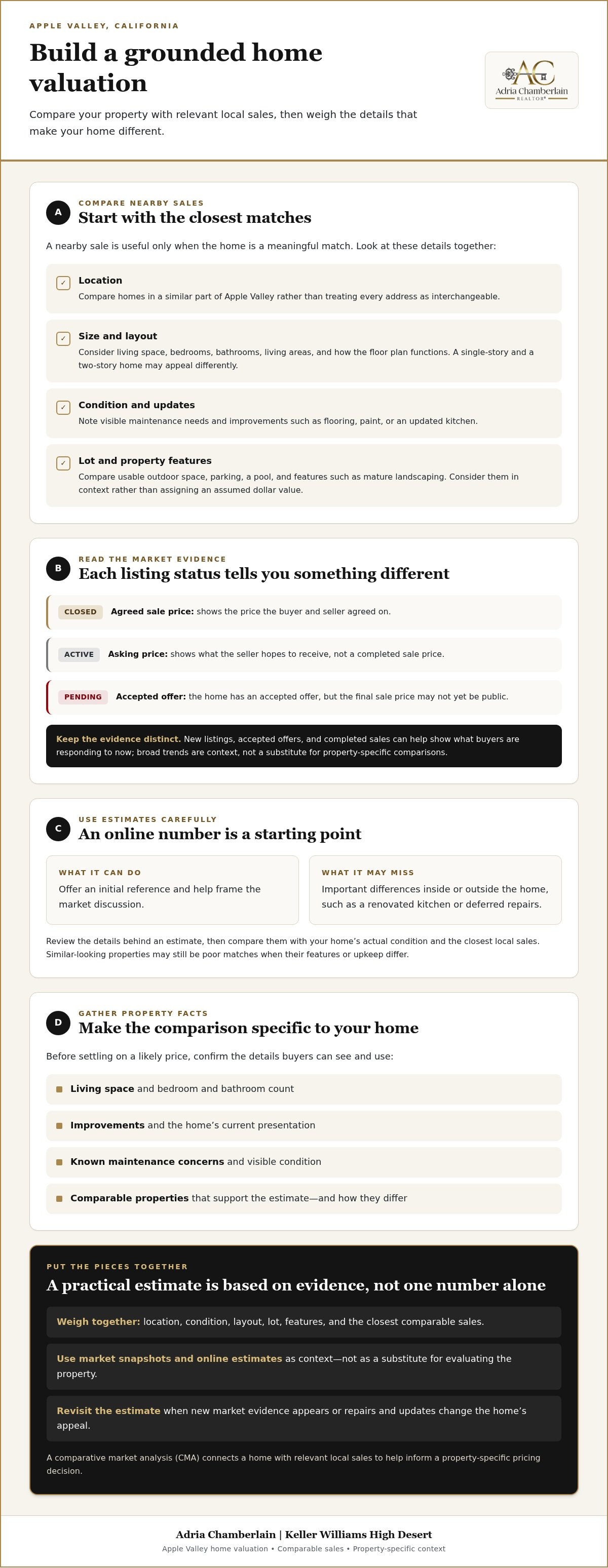
For useful comparisons, focus on sold homes similar to yours in location, size, layout, lot, and condition. A nearby sale can provide context, but may be a poor match if the home has a different floor plan or substantially different features. The closer the comparison, the more meaningful its price as a reference.
Start with the property details buyers can see and use. A single-story home and a two-story home may appeal differently, even with similar interior space. A garage, pool, updated kitchen, or mature landscaping can distinguish one listing from another. Consider these features in context rather than assigning each an assumed dollar value.
Use this practical process to compare Apple Valley sales:
- Match the location. Look for homes in a similar part of town, rather than treating every Apple Valley address as interchangeable.
- Compare the layout. Consider bedrooms, bathrooms, living areas, and how the floor plan functions.
- Review condition. Note visible maintenance needs and updates, such as flooring, paint, or kitchen improvements.
- Check the lot and features. Compare usable outdoor space, parking, a pool, and other property-specific details.
Separate closed sales from active and pending listings. A closed sale shows the price a buyer and seller agreed on, while an asking price shows what a seller hopes to receive. A pending listing has an accepted offer, but its final sale price may not yet be public. Treat each status as a different kind of market evidence.
Online estimates can provide an initial reference, but automated tools may miss important differences inside or outside a home. For example, a renovated kitchen and deferred repairs can make otherwise similar properties poor comparisons. Review the details behind an estimate, then compare them with the home’s actual condition and nearby sales.
Market conditions matter, too. New listings, accepted offers, and completed sales help show what buyers are responding to now. Broad trends can frame the discussion, but they should not replace property-specific comparisons. The home’s features and its closest comparable sales still need careful consideration.
Before settling on a likely price, gather accurate facts about your property. Confirm its living space, bedroom and bathroom count, improvements, and known maintenance concerns. Then note which comparable properties support your estimate and how they differ. This record helps explain why one sale is a closer guide than another.
A valuation is most useful when it supports a clear decision, such as setting an initial asking price or planning a future sale. Treat market snapshots and online estimates as context. Base the property-specific estimate on comparable sales, location, condition, layout, and features together. This gives you a grounded starting point for weighing your options.
Before settling on a figure, use the broader market as context, not as a substitute for evaluating the property. The average home value in Apple Valley, California, is $431,962. Apple Valley, California, home values are up 1.3% over the past year. These figures describe a general market backdrop; they do not establish what a particular home will sell for. A property’s condition, layout, lot, and location can make its likely value differ from the average, even when it is in the same community.
Bring market context together with the closest comparable sales and the home’s current presentation. If broad trends and nearby closed sales point in different directions, examine whether the comparisons truly match the property and whether active listings add useful context. Be ready to explain which features support your estimate and which differences create uncertainty. A thoughtful valuation is not simply a figure drawn from a trend or online tool. It is an informed range grounded in relevant evidence, with room for buyer response and the property’s condition. Revisit the estimate when new market evidence appears or repairs and updates change the home’s appeal. This approach helps keep expectations realistic and gives you a clearer basis for decisions about preparation, pricing, and timing.
Adria Chamberlain | Keller Williams High Desert: Home Valuation & Comparative Market Analysis (CMA)
Adria Chamberlain | Keller Williams High Desert provides a Home Valuation & Comparative Market Analysis (CMA) to help you assess a property’s likely market value. A CMA compares your home with relevant local sales, offering a property-specific perspective alongside broader Apple Valley market trends.
This guidance can help when you’re preparing to sell, considering an asking price, or seeking a clearer picture of your home’s position in the market. Discussing the home’s features and condition puts comparable properties into context, rather than relying on a general estimate alone. If you decide to sell, Residential Property Listing Services can support your next step.
For a home-specific valuation or help understanding comparable sales, contact Adria Chamberlain | Keller Williams High Desert to discuss your property.
Use Your Valuation to Plan Your Next Move
A home valuation in Apple Valley, CA, is most helpful when it informs a decision you’re preparing to make. Before setting a sale price or planning a move, consider your preferred timing, the property’s condition, and what you need from the next step. Those priorities turn an estimate into a practical plan.
Make a short list of questions before discussing your property. You might want to understand how comparable sales inform an asking price, or how selling fits with your plans to buy a home. If you’re preparing to purchase your first home, buyer representation can help keep your goals in focus during the search. Clear priorities make the conversation more focused and useful.
If you’d like to talk through your property or plans, contact Adria Chamberlain | Keller Williams High Desert. A thoughtful next step can make the decisions ahead feel more manageable.


