

There’s no single statewide septic inspection mandate for California home sales. Local county rules determine whether an inspection or county sign-off is required. Septic certification requirements when selling a house in California can therefore vary by location, even for homes with similar systems.
That uncertainty can make a septic problem feel like a roadblock, especially if you hope to sell the property as-is. Known septic issues still need to be disclosed to the buyer. An inspection can help clarify the system’s condition and identify what may need attention.
This guide explains what a point-of-sale septic inspection may involve, how county requirements and maintenance records fit into the process, and what to consider when selling with septic problems. You’ll get a clearer picture of the steps ahead and how to prepare for a straightforward conversation with buyers.
Key Takeaways
- California has no single statewide point-of-sale septic inspection rule; local county requirements can determine the steps for your property.
- Learn what an inspection may assess and why a septic specialist’s findings can help clarify the system’s condition.
- Organized pumping and repair records can give buyers useful context about the system’s care and history.
- Selling as-is may be an option to discuss, but it doesn’t remove the need to disclose known septic problems.
- A home valuation and comparative market analysis can help you consider how a septic issue may fit into your selling plans.
What Does a Point of Sale Inspection Entail?
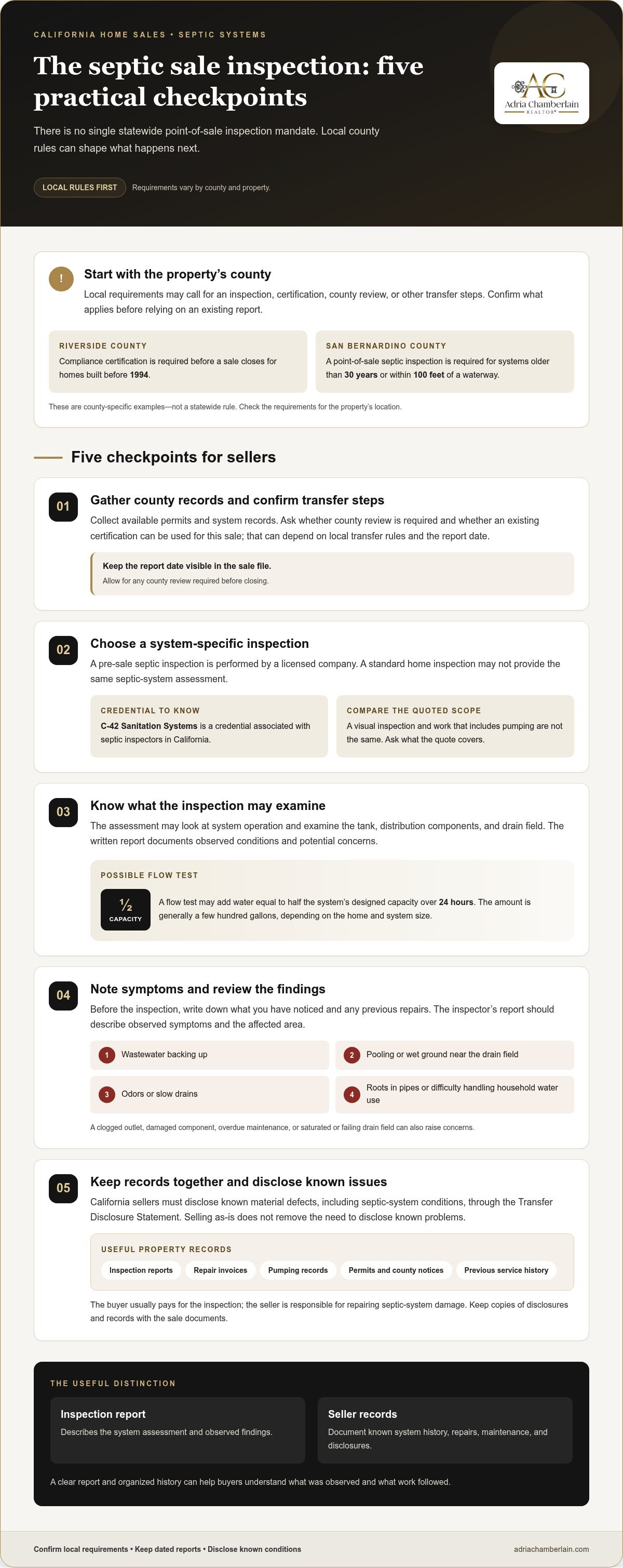
California has no single statewide septic inspection mandate for home sales, so local county rules shape the process. A point-of-sale inspection assesses the system and may identify repairs or required steps for the sale.
Point-of-sale inspection requirements
A pre-sale septic inspection is performed by a licensed company. It assesses system operation and may examine the septic tank, distribution components, and drain field. The report documents observed conditions and potential concerns, helping sellers understand what the inspection covered.
A flow test may assess performance by adding water equal to half the system’s designed capacity over 24 hours. The amount is generally a few hundred gallons, depending on the home and system size. Keep the dated report with property records and note its findings before sharing it with buyers. California’s septic certification requirements when selling a house can depend on local rules.
County inspection and transfer requirements
Local rules can make an inspection part of the sale process. Riverside County requires compliance certification before a sale closes for homes built before 1994. San Bernardino County requires a point-of-sale septic inspection for systems older than 30 years or located within 100 feet of a waterway. These examples show why identifying the property’s county is an early practical step.
Gather available permits and system records, then determine which local transfer steps apply. Whether an existing certification can be used for a sale depends on county transfer requirements and the report date. Keep the date visible in the sale file and account for any county review required before closing.
Inspector credentials and inspection costs
A C-42 Sanitation Systems license is a credential associated with septic inspectors in California. A standard home inspection may not provide the same system-specific assessment. Sellers commonly arrange a separate septic inspection with a qualified septic professional and request a written report identifying the components examined and findings recorded.
Compare the quoted scope: a visual inspection and work that includes pumping are not the same.
Common inspection failure causes
Inspection concerns can include wastewater backing up, pooling over the drain field, or a tank that cannot move wastewater properly. A clogged outlet or damaged component can disrupt flow, while a saturated or failing drain field can leave wastewater near the surface. The report should describe the observed symptom and affected area of the system.
Roots entering pipes, overdue maintenance, or difficulty handling ordinary household water use can also raise concerns. Before the inspection, note odors, slow drains, wet ground, and previous repairs. This context helps the inspector distinguish a service issue from a larger system problem. Keep the written findings with the property records.
California septic regulations and seller resources
California has no single statewide septic inspection mandate for home sales; local county requirements may add steps. The California State Water Resources Control Board’s statewide OWTS Policy governs systems near sensitive water bodies.
California septic seller resources
The State Water Resources Control Board’s OWTS Policy provides a statewide environmental framework for onsite wastewater treatment systems near sensitive water bodies. County programs add local details, so identify the property’s county and review its septic records and transfer requirements.
Sonoma County shows how local rules may distinguish system types. Its operational permit program applies to non-standard systems using supplemental treatment, rather than standard tank-and-drainfield systems. In August 2024, Sonoma County’s Board of Supervisors approved a revised Local Area Management Program and updated onsite wastewater manual. The manual replaced Class I, II, and III classifications with Code Compliant or Legal Non-Conforming.
Seller disclosure requirements
California sellers must disclose known material defects, including septic-system conditions, through the Transfer Disclosure Statement. Use the form to describe relevant known conditions, and keep the inspection report and service records organized separately.
Before completing disclosures, gather documents that explain the system’s history, such as inspection results, repair invoices, pumping records, and county notices. These records can help distinguish a completed repair from an active issue and give buyers a clearer account of the property.
Disclosure of known septic issues
Disclose known problems plainly, including previous septic failures, repairs, or overdue maintenance. If an earlier inspection identified a concern, keep its written findings with the transaction documents rather than relying on memory. A clear record helps buyers understand what was observed and what work followed.
Disclosure matters even when a seller hopes to transfer the property as-is. California sellers may face buyer lawsuits or rescission if they fail to disclose known septic defects or overdue maintenance. A buyer’s inspection does not erase what the seller already knows. Share relevant information before the buyer makes decisions about the sale.
Seller and buyer responsibilities
The seller is responsible for repairing septic-system damage, while the buyer usually pays for the inspection. Buyers can arrange a third-party septic inspection to understand the system’s condition. The inspection report and seller records serve different purposes: one assesses the system, while the other documents the seller’s known history.
After closing, a seller may still be liable for repair costs if the buyer discovers septic issues. Keep copies of disclosures, reports, county paperwork, and repair receipts together so the transaction record reflects what was known and shared. For help planning the listing process around property records and disclosures, residential property listing support can be a practical next step.
County permits and environmental health sign-off
County environmental health rules can affect septic paperwork before a California home sale closes. In some counties, the local health department must sign off on inspection results before escrow can close.
For a seller, the practical first step is to identify the county’s role in the transfer. Find existing septic permits, inspection reports, and county correspondence, then organize them by date and system component. These records help distinguish an inspection finding from a county decision about compliance or permits. Ask the county environmental health department which process applies and what records it needs to review.
Keep the county’s response with the transaction file. If local sign-off is required, inspection results alone may not complete that step. The county review and inspector’s report serve different purposes: the report describes the system’s observed condition, while sign-off addresses the county’s review. For example, a seller may have an inspection report but still need county confirmation before escrow closes where local rules require it.
Sonoma County illustrates why system type matters. Its operational permit program applies to non-standard septic systems using supplemental treatment, rather than standard tank-and-drainfield systems. Sonoma County’s Board of Supervisors approved a revised Local Area Management Program and updated Onsite Wastewater Treatment System Manual in August 2024. The county’s program details should therefore be considered alongside the system’s design, rather than assuming every septic property follows the same permit path.
The updated Sonoma County manual replaced Class I, II, and III system classifications with Code Compliant or Legal Non-Conforming. These terms describe that manual’s classifications and are not interchangeable labels for every California county. For a property in Sonoma County, compare available records with current county terminology. In another county, organize the same basic property information but follow that county’s categories and review process.
Use a simple document sequence: locate the county permit or system record, match it to the property’s septic design, and collect inspection and repair documents. Then determine whether local health department sign-off applies before escrow closes. This helps identify gaps between system records and the paperwork needed for transfer. Don’t treat a permit, inspection report, and county sign-off as the same document. Keeping each distinct makes it easier to respond to county questions and explain the file to a buyer.
Maintenance records and tank pumping
A dated maintenance file helps explain what work a septic system has received before a sale. California homeowners are advised to pump septic tanks every 3-5 years. Keep each pumping receipt with its service date and any notes about the work. If the records show a longer gap, make that history clear rather than guessing when the tank was last serviced.
Build the file from documents already connected to the property. Useful records include pumping receipts, inspection reports, repair invoices, permits, and county correspondence. Match each document to its date and the work performed. For example, label an invoice “tank pumping” or “pipe repair” rather than leaving buyers to interpret an unfamiliar description.
The amount depends on the work involved, so distinguish a pumping receipt from a repair invoice when organizing the file. A combined bill may cover both services. Keeping the line items together helps explain whether a charge reflects routine tank service, a repair, or both.
Before listing, review the records in a few steps. First, gather the latest pumping and repair documents. Next, compare their dates with available inspection and permit records. Then note any gaps or unresolved recommendations. This won’t create missing paperwork, but it can prevent an old receipt from being mistaken for a recent service record.
- Record the service date: A receipt helps establish when pumping took place.
- Keep repair details: An invoice may show which component received attention.
- Preserve inspection findings: Keep the report with related follow-up documents.
- Separate open items: Note recommendations that don’t have a matching repair record.
For example, a file with a pumping receipt and a separate pipe-repair invoice tells a more useful story than a folder of unlabeled paperwork. It shows which tasks were completed and when, while leaving the inspection report to explain observed conditions. If there’s no receipt for a past service, don’t present an estimate as a documented date.
Maintenance records also help frame questions during the sale. A buyer reviewing a pumping receipt may want to know how it relates to an inspection finding or later repair. Keeping those documents together makes the sequence easier to follow. Clear dates and descriptions provide a practical record of the system’s maintenance history.
Selling a property with septic problems as-is
An as-is sale may be an option when a septic system needs repair, but it doesn’t erase known issues. California sellers must disclose known material defects, including septic conditions. A clear record of the problem, inspection findings, and completed work helps buyers understand what they’re considering before making an offer.
Start by separating confirmed findings from assumptions. If an inspection identifies a failing leach field, describe the finding and include the report. If a repair has been completed, keep the invoice with the report. This gives buyers a factual picture without presenting an estimate as a diagnosis or an unresolved concern as repaired.
Repair scope can affect the sale discussion. The work depends on the problem and the system. A report that distinguishes a pipe issue from a failing drain field helps buyers understand why repair needs may differ.
Some California escrow officers withhold 1.5 times the estimated repair cost until septic issues are resolved. This practice can affect the transaction’s funds and timing, so identify any proposed holdback and understand how it relates to the written repair estimate. It’s not the same as completing the repair, and the specific escrow arrangement should be documented in the sale paperwork.
Use these steps to prepare an honest as-is listing:
- Collect the inspection report, repair estimates, invoices, and county records.
- Disclose known defects and overdue maintenance through the appropriate seller disclosures.
- Keep unresolved recommendations separate from completed repairs.
- Discuss whether the sale terms account for repairs, an escrow holdback, or the property’s condition.
The buyer usually pays for the inspection, while the seller is responsible for repairing septic-system damage. If issues surface after closing, the seller may still face repair-cost liability. California sellers may also face a buyer lawsuit or rescission if known defects or overdue maintenance weren’t disclosed. An as-is approach should therefore pair transparent disclosures with organized records, rather than relying on the phrase alone.
If you’re weighing an as-is sale, talk through your property-selling options and how the septic findings may shape the listing conversation.
Adria Chamberlain | Keller Williams High Desert: Home Valuation & Comparative Market Analysis (CMA)
Adria Chamberlain | Keller Williams High Desert can help you consider how a septic issue fits into your selling plans. A Home Valuation & Comparative Market Analysis (CMA) provides a market-informed perspective on pricing, while Residential Property Listing Services can support preparation and presentation of the property to buyers.
Turn to Adria when you’re weighing repair options, planning an as-is sale, or deciding how to explain documented septic conditions to prospective buyers. Inspection findings and available records can inform that conversation alongside the home’s other features and local market context. A CMA is a planning tool, not a guarantee of a sale price or outcome.
For a thoughtful conversation about your property and next steps, contact Adria Chamberlain | Keller Williams High Desert.
Choose Your Next Step With Confidence
A septic concern doesn’t have to settle every selling decision at once. Start by deciding what you need to resolve before listing and what information should guide conversations with prospective buyers. Septic certification requirements when selling a house in California can influence your plan, while your timing, property condition, and preferred sale approach shape the choices ahead.
If you’re preparing a home in Apple Valley, Victorville, Hesperia, or a nearby High Desert community, a calm planning conversation can help you map out the real estate steps alongside your septic paperwork. Adria Chamberlain | Keller Williams High Desert can help you consider your selling options and plan a path that reflects your priorities. For personalized guidance, contact Adria Chamberlain | Keller Williams High Desert. Take the next step when you’re ready, with a clearer plan for moving forward.
Frequently Asked Questions
Is septic system certification required when selling a house in California?
No single statewide septic certification rule applies to every California home sale. A county may require an inspection or compliance document based on local rules, system characteristics, or property location. For example, a seller in a county with a point-of-sale requirement may need to plan for an inspection as part of the transaction. Treat “certification” as a local process, not one universal statewide document.
Do California counties require septic inspections, permits, or certifications before transfer of ownership?
Some California counties require septic review or paperwork before a property transfers, while others may not require the same steps. In certain counties, the local health department must sign off on inspection results before escrow closes. Required documents vary by county. Identify the property’s county, then organize its permits, inspection reports, and system records for the sale.
What does a septic system inspection or certification include in California?
A septic inspection evaluates the system’s condition and operation, with the written report documenting observations and concerns. A flow test may assess whether the system handles water as designed. For example, the test can use half the system’s designed capacity over 24 hours. Ask for a report that distinguishes observed problems from recommended follow-up, so buyers can understand what the findings mean.
Who is qualified to inspect and certify a septic system in California?
A licensed company should perform a pre-sale septic inspection, and C-42 Sanitation Systems is a relevant California license credential. A standard home inspection and a septic-specific assessment have different scopes. For example, a home inspector’s general report may not include a septic flow test. Review the inspector’s credentials and ensure the written report identifies the septic work performed.
How much does a septic inspection or certification cost in California?
Compare the scope, not just the quoted total. A quote that includes pumping covers different work from a visual inspection, so confirm what the fee includes.
Who pays for septic inspection, repairs, or certification in a California home sale?
The buyer usually pays for the septic inspection, while the seller is responsible for repairing system damage. That distinction doesn’t automatically settle every transaction expense or certification arrangement. If a sale requires additional paperwork or follow-up work, document who will arrange and pay for it in the agreed sale terms. Keep inspection charges, repair invoices, and written agreements separate.
What happens if a septic system fails inspection before closing in California?
A failed inspection can lead to a repair discussion, revised sale terms, or a decision to proceed with the property’s condition disclosed. The report helps define the issue, and a buyer may weigh its findings before moving forward. If county approval is required, unresolved findings may also affect the steps before escrow closes. Share known defects and inspection results clearly, and put any repair agreement in writing.
How can buyers and sellers verify septic permits, records, and system location in California?
Start with the property’s county environmental health department and request the septic permit and available system records. Compare those documents with the seller’s inspection reports, pumping receipts, and repair invoices. If the file includes a site plan, use it to understand the recorded system layout, then compare it with the inspection’s observations. Keep differences or missing documents visible in the transaction file rather than assuming the records match the property.


