

Selling a mobile home with land in Hesperia, CA doesn’t follow one fixed timeline. The time from listing to closing depends on how the home and land are titled, the buyer’s financing, and the steps needed to complete escrow. Begin by clarifying exactly what the sale includes, then set an asking price that reflects both the home and the parcel.
Those asking prices don’t establish the value of a home sold with land, and a listing for a home in a park may not include ownership of the land.
This guide explains what can affect the sale timeline, how manufactured and modular listings differ from land-included sales, and how to estimate proceeds after sale-related costs. It also covers how to compare listings and which property details can influence what you take away from the sale.
Key Takeaways
- Compare manufactured and modular listings carefully: a home listed in a park may not include the land, so its asking price may not be a useful match for your property.
- Clarify how the home and land are titled, then organize the relevant ownership and property records to help prepare for a smoother sale.
- Estimate your proceeds by considering the sale price alongside any loan payoff, closing costs, and potential taxes.
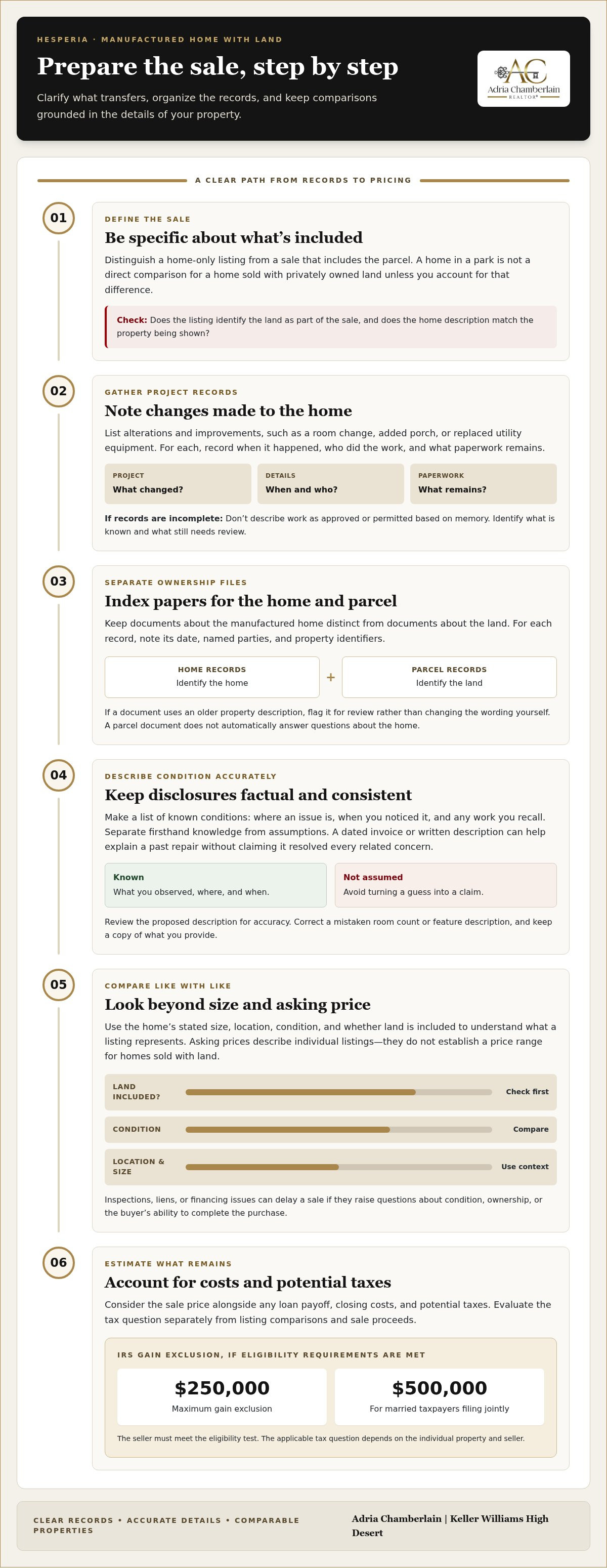
- According to the Internal Revenue Service, eligible sellers may exclude up to $250,000 of gain, or $500,000 for married taxpayers filing jointly, if they meet the eligibility test.
- Weigh the likely benefit of repairs against their cost and timing, and consider a market valuation to help set a grounded asking price.
Manufactured and modular home listings in Hesperia
Hesperia listings show why a home’s asking price isn’t automatically a useful comparison for a home sold with land. Inspections, liens, or financing issues can delay a sale if they raise questions about the property’s condition, ownership, or the buyer’s ability to complete the purchase.
Permits, Title Documents, and Disclosures
Use listing details to identify what you’re comparing: the home’s stated size, location, condition, and whether land is included. Those asking prices describe individual listings, not a price range for properties sold with land.
If you’re evaluating a home or preparing to sell, organize available records about its features and condition. Examples include paperwork for additions, repair receipts, and documents identifying the home and parcel. These materials help you compare a listing description with what’s actually at the property. They don’t make two properties comparable if their land arrangements differ.
Disclosures and records can also explain details that a short listing description can’t capture. Buyers may want to know whether an improvement was completed, what repairs were made, or which features remain unchanged. Keep descriptions factual and consistent with the records you have. This gives buyers a clearer basis for discussion without assuming every sale uses the same set of documents.
Ownership and Title Transfer
When comparing listings, distinguish those that appear to offer a home alone from those offering a home with land. That difference affects what the buyer is considering. A home in a park isn’t a direct comparison for a home sold with a privately owned parcel unless you account for the difference.
When reviewing a property, note whether the listing identifies the parcel as part of the sale and whether the home’s description matches the property being shown. Uncertainty about what transfers can prompt questions from buyers, lenders, or transaction professionals. A clear description helps everyone understand the proposed sale, while the property’s ownership records provide the context.
The Hesperia mobile-home search page displayed 22 results, and listing data was dated October 23, 2026. One listing at 9161 Santa Fe Ave E Space 29 showed 1,248 square feet, but that detail alone doesn’t establish a land-included comparison. Look at the full listing context, not just the home’s size or asking price.
According to the Internal Revenue Service, the maximum gain exclusion is $250,000, or $500,000 for married taxpayers filing jointly, if the seller meets the eligibility test. For an individual property, evaluate that tax question separately from listing comparisons and sale proceeds.
What permits, title documents, and disclosures are required to sell a manufactured home with land in California?
There isn’t one document checklist for every manufactured home and parcel. The paperwork to prepare depends on how the home is documented, what work has been done, and how the property is being sold. Treat permits, title information, and disclosures as separate questions, then organize relevant materials so the sale description can be checked against the property.
Organize Permit Records
Start by listing changes made during your ownership, such as a room alteration, added porch, or replaced utility equipment. For each project, note when it happened, who did the work, and what paperwork remains. Records can help explain a feature to a buyer, but having them doesn’t establish that every approval or project detail is complete.
If paperwork is incomplete, don’t describe work as approved or permitted based on memory. Write down what you know and identify the specific question that remains, such as whether a document relates to the porch or a separate repair. This keeps the listing description grounded in available information instead of turning a guess into a claim.
Gather Home and Land Ownership Documents
Create a document index that separates papers about the manufactured home from those about the parcel. Record each document’s date, named parties, and property identifiers. This helps the transaction team see which materials refer to the home, which refer to the land, and whether the files appear to describe the same sale.
For example, if a document uses an older property description, flag it for review rather than changing the wording yourself. Keep relevant transfer or ownership materials together, but don’t assume a document for the parcel also answers questions about the home. The goal is a clear, traceable file, not a legal conclusion you’ve drawn yourself.
Prepare Accurate Disclosures
Make a factual list of known conditions, including where an issue is, when you noticed it, and any work you recall. Separate firsthand knowledge from assumptions. If a buyer asks about a past repair, a dated invoice or written description can help you respond consistently without claiming that the repair resolved every related concern.
Before marketing the property, review the proposed description and disclosure materials for accuracy. Correct a mistaken room count or feature description instead of carrying it into the advertising. Keep a copy of what you provide and note when it was shared. The transaction team can identify the forms that apply to the sale and help align the paperwork with its structure.
Prepare an inventory and mark each item as available, incomplete, or needing review. This gives the transaction team focused questions to address, while keeping your public description limited to details you can accurately support.
How do you transfer ownership and title for a manufactured home attached to land in California?
Plan the handoff around a clear description of what the buyer is acquiring. A home sold with land can raise questions about whether the sale covers the structure, the parcel, or both. The paperwork and sequence depend on the property, so first define the agreed transfer and assign practical next steps.
Match the Home to the Parcel
Use the purchase agreement and related sale materials to describe the property in plain, consistent terms. Identify the home and land as separate parts of the transaction where that distinction matters. For instance, clarify whether a detached storage building, appliances, or other items are included instead of leaving the buyer to infer their status during a showing.
Make a short list of handoff questions before signing. Which items stay with the property? When will the buyer receive keys, access codes, and operating information? Clear answers help both parties understand the practical scope of the sale without relying on assumptions or casual conversations.
Resolve Claims Before Closing
Discuss any financial or contractual obligations that could affect the agreed handoff. For example, if you’ve promised to remove stored items or complete a repair, state who will handle it and how completion will be documented. If an obligation involves a lender or another party, identify the question early and keep written communications organized.
Record agreement changes in the transaction documents rather than leaving them as verbal understandings. A written update can specify who is responsible, what work or payment is involved, and when the parties consider it complete. This reduces confusion when the buyer and seller review final arrangements.
Coordinate the Transfer Through Escrow
Use the transaction’s closing process to coordinate document delivery, signatures, funds, and possession timing. Ask who is responsible for each item and note any dates stated in the agreement. A simple tracker can list the document or task, who handles it, and whether it’s complete.
Before the handoff, confirm that practical details match the written agreement. For example, the buyer should know which keys open the home and which utility or equipment instructions are included. Keep signed transaction documents and written amendments with your personal records.
For a California sale, don’t treat the home’s physical attachment to land as a complete description of the transfer. The agreed sale terms, property details, and closing arrangements all shape the handoff. Organizing responsibilities and questions in advance helps everyone follow the transaction documents instead of relying on informal assumptions.
What taxes and closing costs apply when selling a mobile home with land in San Bernardino County?
Your net proceeds are the sale amount minus the costs and obligations paid through closing. For a San Bernardino County property, start with the expected sale price, then account for any loan payoff, transaction expenses assigned to you, and possible income tax on taxable gain. The settlement statement itemizes amounts that affect your final proceeds.
Separate Sale Price, Gain, and Proceeds
These figures answer different questions. The sale price is the amount agreed with the buyer. Net proceeds are what remains after applicable closing payments. Taxable gain is a tax calculation, not simply the sale price or the money received at closing. Keep purchase records, improvement receipts, and sale documents together to support the calculation.
If the manufactured home is your main home, you may be able to exclude up to $250,000 of gain from income ($500,000 on a joint return in most cases), according to the Internal Revenue Service. Eligibility rules apply, so the exclusion is not automatic. The home’s use, ownership, filing status, and other circumstances can affect how the rule applies.
Review Potential Closing Items
Use the draft settlement statement to review each expense or credit charged to you as the seller. Depending on the transaction, it may show loan payoffs, escrow or title charges, agreed repair credits, or other costs assigned in the contract. Don’t assume every item applies to every sale. Ask what each line represents and how it affects your estimated proceeds.
Pay particular attention to loan payoffs. Any amount owed against the land or home reduces the funds left for you. If separate financing is tied to each, make sure both obligations appear in the closing figures. Compare payoff amounts with current lender statements and account for any difference before relying on the estimate.
Build a Practical Proceeds Estimate
Make a worksheet with the expected sale amount at the top. Subtract documented debts and seller expenses shown in the proposed settlement figures. Add any credits or adjustments assigned to you, and keep possible income tax separate until its treatment is understood. This gives you a clearer estimate than treating the listing price as cash available after closing.
For example, a sale with a remaining loan and negotiated repair credit will leave different proceeds from one without those items, even at the same sale price. Use the contract and settlement statement to identify the actual costs and credits instead of relying on a general estimate. Keep receipts and prior ownership records available for tax calculations.
Before accepting an offer, compare its estimated net proceeds with your financial goals. The offer price matters, but so do debt balances, negotiated credits, and seller expenses shown in closing documents. A careful line-by-line review helps you understand what the sale may leave after closing and what information still affects the tax calculation.
Should you sell a manufactured home with land as-is, make repairs, or list with a real estate agent
The right choice depends on the home’s condition, your timeline, and what buyers can compare in Hesperia. Before deciding, walk through the property and sort visible concerns into safety, function, and appearance. A roof leak differs from dated flooring, and each may shape a buyer’s questions differently.
When an As-Is Sale May Fit
An as-is sale can suit sellers who prefer not to manage repairs before listing. It doesn’t mean the property’s condition should be concealed. Describe known issues accurately, such as a plumbing leak or unfinished improvement, and keep related records available. A buyer may still request an inspection or negotiate after learning about the home’s condition.
Consider the trade-off: skipping repairs may reduce preparation time, but buyers may account for visible work when making an offer. For example, a home with worn flooring but functioning plumbing raises different questions from one with an active leak. Identify the issues, document what you know, and decide whether the convenience of selling as-is fits your priorities.
Which Repairs Deserve Attention?
Start with repairs that affect basic function or could complicate a buyer’s evaluation. Fixing a dripping pipe may be more practical than replacing every dated cabinet. For each proposed project, note the work, expected disruption, and how it could change the home’s presentation. Avoid spending on upgrades simply because they’re popular elsewhere.
Then compare the property with relevant Hesperia listings and consider whether a repair would help buyers understand its condition. Keep receipts and permits for completed work with your sale records. If a repair involves a system or structure, get a clear description of the work and retain supporting paperwork for later questions.
When an Agent Can Help
A real estate agent can help position the home and land together, rather than treating the manufactured home as a stand-alone unit. That distinction matters when comparing it with listings where buyers may be purchasing a home but not the underlying parcel. Ask for a pricing discussion that considers the land, the home’s condition, and comparable property features.
An agent can also help you weigh an as-is listing against selected repairs, then guide the listing and buyer discussions. For example, if the home needs cosmetic updates and has a title question, address the ownership issue before investing in appearance. This keeps preparation focused on the transaction’s practical needs.
Make the decision in order: document condition, identify necessary work, compare relevant properties, then choose an as-is or repair plan. If you’re weighing a market-ready sale against an as-is approach, discuss your home-selling options and the factors that may shape your listing plan.
Adria Chamberlain | Keller Williams High Desert: Home Valuation & Comparative Market Analysis (CMA)
Adria Chamberlain | Keller Williams High Desert can help you assess how your manufactured home and land fit the Hesperia market. A Home Valuation & Comparative Market Analysis (CMA) considers relevant property details to support a considered asking-price decision, rather than relying on listings that may not include land.
Consider this guidance when weighing an as-is sale against repairs, preparing to list, or assessing how the parcel affects your pricing strategy. Residential Property Listing Services can support your next step if you decide to put the property on the market. A clear view of the home, land, condition, and ownership records helps shape an informed plan.
For personalized guidance on your property, contact Adria Chamberlain | Keller Williams High Desert or visit adriachamberlain.com.
Plan Your Next Move With a Clear Starting Point
As you plan to sell a mobile home with land in Hesperia, CA, look beyond the transaction itself. Decide what you need from your next home or living arrangement, and note any timing preferences that matter to your household. That personal plan can help you evaluate offers and make choices that fit your next chapter, rather than focusing only on the sale.
A useful next step is to discuss your property’s position in the local market and the path from preparation to listing. Adria Chamberlain | Keller Williams High Desert offers Home Valuation & Comparative Market Analysis (CMA) and Residential Property Listing Services. For buyers planning a first purchase after selling, First-Time Homebuyer Representation can help with the home search.
For guidance tailored to your situation, contact Adria Chamberlain | Keller Williams High Desert. You can take the next step at a pace that feels right for you.
Frequently Asked Questions
How long does the whole process take?
The sale moves through preparation, listing, offer review, and closing, with each stage affecting the overall timeline. Before listing, gather property records and decide what will be included. After accepting an offer, buyer financing, inspections, title questions, and escrow paperwork shape the remaining steps. A title discrepancy or unresolved loan may add work, while an organized file helps keep decisions and document requests moving.
How do you sell a mobile home with land in Hesperia, CA?
Start by defining exactly what the buyer will receive: the home, the parcel, and any included items or improvements. Then assemble property records, decide whether to make repairs, and set an asking price based on comparable properties with similar land arrangements. Once listed, review offers for price, financing, contingencies, and proposed timing. Keep details about the home and land consistent in the listing and transaction paperwork.
What is the current market value of a mobile home with land in Hesperia, CA?
A sound valuation compares the home and parcel with similar properties, not just mobile-home asking prices. Consider land size, location, condition, usable features, and whether comparable listings include ownership of the land. Also distinguish active asking prices from completed sales: an asking price shows what a seller hopes to receive, while a valuation weighs evidence from relevant transactions and property differences.
How long does it take to sell a manufactured home with land in Hesperia?
The time from listing to closing depends on buyer interest, offer terms, financing, and title work. A well-prepared listing can answer basic questions early, including what land transfers and which property features are included. After an offer is accepted, inspection findings, lender requirements, and document corrections can affect the closing schedule. Review those milestones with the transaction team as the sale progresses.


