

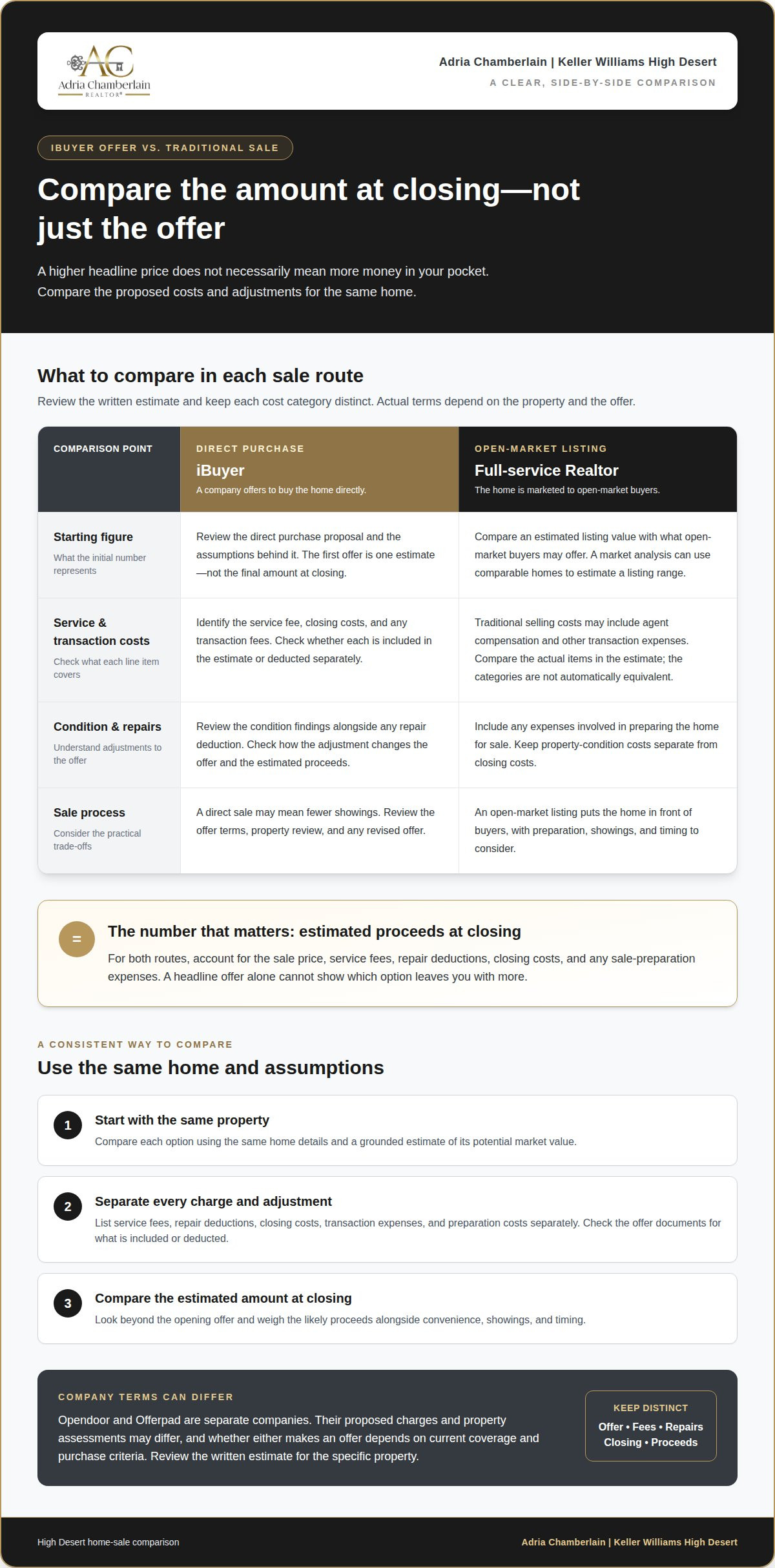
The offer with the higher headline price may not leave you with more money at closing. In the iBuyer cash offer vs. full-service Realtor comparison in the High Desert, look beyond the offer and account for fees, repair deductions, closing costs, and any expenses involved in preparing the home for sale.
A cash offer can appeal when you want a direct sale with fewer showings. Selling with a full-service Realtor can put your home in front of open-market buyers, but your final proceeds depend on the sale price and transaction costs. Weigh convenience against what you may keep from the sale.
This article explains how iBuyer offers are calculated, how service fees and inspection-related deductions can affect your proceeds, and how contingencies and inspections may differ from a traditional sale. You’ll also learn how to compare both routes using the same home value and estimated costs, so you can make an informed decision for your property in Apple Valley, Victorville, Hesperia, and nearby High Desert communities.
Key Takeaways
- Compare estimated proceeds after service fees, repair deductions, closing costs, and sale-preparation expenses, not just the headline offers.
- Understand how an iBuyer’s offer process differs from listing a home for open-market buyers.
- Weigh a potentially more direct sale against the preparation, showings, and timing involved in a traditional sale.
- Review inspection findings and contract contingencies to see how they could affect the offer and your final proceeds.
- A local comparative market analysis can help you assess a property’s potential listing value in the High Desert.
IBuyer service fees and repair deductions
An iBuyer’s opening offer doesn’t show the full amount you may receive at closing. Compare each proposed charge and adjustment with the estimated proceeds, then assess that figure against a traditional sale using the same home and assumptions.
Opendoor and Offerpad are the iBuyer brands considered here. Whether either makes an offer on a particular High Desert home depends on its current coverage and purchase criteria.
Service Fees and Closing Costs
An iBuyer service fee is a charge associated with the direct purchase, while closing costs cover expenses involved in completing the transaction. Traditional selling costs may include agent compensation and other transaction expenses. These categories are not automatically equivalent, so compare the actual items listed in each estimate.
For example, compare an iBuyer’s proposed service charge with the costs in a traditional-sale estimate for the same property. Then consider how each affects the expected amount at closing. A headline offer alone can’t show which route leaves you with more, because both the sale price and deductions matter.
Check what each line item represents in the offer documents. A clear breakdown helps distinguish charges included in the estimate from amounts that may be deducted separately.
Repair Deductions and Transaction Fees
A repair deduction is an adjustment to the proposed purchase amount based on the home’s assessed condition. Transaction fees may appear separately, so a seller needs to understand whether the proceeds estimate accounts for both. The difference matters because an estimate that omits one category can make the final amount look higher than it is.
Review the condition findings alongside the proposed adjustment. If the review identifies a repair, compare the stated deduction with the change to the offer and the resulting proceeds estimate. The contract and any revised offer show how that item is handled.
Separate repair costs from closing costs, too. Identify which charges relate to the property’s condition and which relate to completing the sale. This makes the total easier to compare with a traditional-sale estimate.
Opendoor and Offerpad Fees
Opendoor and Offerpad are separate companies, so their proposed charges and property assessments may differ. The company name alone doesn’t reveal the total cost for a home in Apple Valley, Victorville, or Hesperia. Review the written estimate for that property rather than assuming the terms are identical.
Compare each company’s offer, service charge, condition adjustments, transaction expenses, and estimated proceeds at closing. Keep those categories distinct, then compare the result with a traditional-sale estimate for the same home. This gives you a practical way to assess the offers without treating a brand’s initial figure as the final amount.
What Is an iBuyer in Real Estate?
An iBuyer is a company that offers to purchase a home directly from its seller rather than marketing it through an MLS listing. You can compare that proposal with an estimated open-market sale, but the figures represent different paths. For a useful iBuyer cash offer vs. full-service Realtor comparison in the High Desert, consider the home’s likely market value and each route’s terms.
How do iBuyer cash offers compare with recent High Desert home sale prices? Compare an offer with closed sales of similar homes, accounting for differences in location, condition, size, and features. A sale in Barstow may not be a useful comparison for a property in Phelan, even if the homes seem similar at first glance.
Local conditions shape how comparable sales inform an estimate. In Apple Valley, Victorville, or Hesperia, nearby competing listings and buyer interest can help frame a possible listing price. A regional average is not a property-specific estimate: the home’s characteristics and the relevance of the comparison properties matter more than a broad area-wide figure.
What local High Desert market conditions affect the choice between an iBuyer and a realtor? The number and similarity of competing homes, recent comparable sales, buyer interest, and the property’s condition all shape the comparison. For example, a seller in Adelanto can assess whether nearby closed sales offer a meaningful reference for the home’s expected open-market value.
The iBuyer process begins with property details and a direct purchase proposal. The seller can review the offer’s assumptions and compare them with an independent market analysis of a potential MLS listing. Treat the first figure as one estimate, then consider how the property review and written terms relate to the amount the seller expects to receive.
A real estate agent’s market analysis can estimate a listing range using comparable homes. You can then compare that estimate with the iBuyer’s proposal, accounting for the different terms and costs of each route. This is especially useful when a home in Oak Hills or Helendale has features that make nearby comparisons less straightforward.
For example, a homeowner in Victorville might compare a direct offer with an expected sale price based on similar nearby homes. The direct offer is a concrete proposal; an MLS listing tests the home with open-market buyers. Neither figure alone captures the full decision, so consider how each route fits your timing, priorities, and property.
An iBuyer cash offer vs. full-service Realtor decision in the High Desert is clearer when the same property details inform both estimates. Compare the home’s likely market value, condition, and the terms attached to each option. This gives sellers in Apple Valley, Hesperia, and nearby communities a grounded way to assess both paths without relying on a general regional price.
Should You Use an iBuyer to Sell Your Home?
An iBuyer can appeal when you want a direct purchase process, while a traditional sale involves marketing the home before closing. Consider how each schedule fits your move, mortgage, and plans if the sale takes longer than expected.
Comparing Sale and Closing Timelines
A sale timeline includes finding a buyer, agreeing on contract terms, and reaching closing. An iBuyer’s schedule follows its offer review, property assessment, and agreed closing date. A traditional listing also requires time to attract buyers before you can consider an offer.
These stages matter when planning. If you’re relocating from Hesperia, for example, you may need to coordinate your new home and moving arrangements around the closing date. Compare the full sequence, not just the period between accepting an offer and transferring ownership.
Convenience Throughout the Sale
Convenience comes down to how much coordination you handle during the transaction. A traditional listing involves decisions about preparation, buyer visits, and offer review; an iBuyer process centers on the company’s review and purchase terms. The difference can matter when you’re balancing work, family, and a move from Apple Valley.
If you have a fixed relocation plan, scheduling showings can add logistical work. A direct sale avoids marketing the home to multiple prospective buyers, but the property review and contract still require attention. Consider which set of tasks better fits your time and flexibility.
Closing dates are agreed as part of the transaction and determine when you can plan the transfer. Mortgage payoff arrangements, moving logistics, and the next home’s availability all connect to that date. If you’re in Victorville and coordinating two moves, consider these details alongside the offer amount.
Traditional-sale contracts can include contingencies, conditions that affect how the transaction proceeds. If a buyer’s financing or another contract condition is not met, you may need to revisit the schedule and consider next steps under the agreement. That can cost time and mean returning to the process of finding a buyer.
An iBuyer’s direct offer changes the sequence, but you still need to review the contract, property assessment, and closing arrangements. Understand how the proposed dates fit your plans and what the agreement says if circumstances change. A clear schedule is useful only when it works with the rest of your move.
An agent can help you weigh timing against the actual terms and expected proceeds. Commission is one consideration, but preparation, scheduling flexibility, and the possibility of restarting a sale matter, too. For a High Desert homeowner, the right route depends on whether speed or broader exposure matters more to the next move.
Offer contingencies and home inspections
An offer sets out the buyer’s proposed price, timing, and conditions for completing the transaction. An inspection can reveal issues that prompt further discussion, so compare the written terms and likely next steps, not just the offer amount. With either an iBuyer or an open-market buyer, inspection findings may affect the final agreement.
A cash purchase means the buyer isn’t relying on a mortgage to fund the purchase, but cash doesn’t automatically mean an unconditional offer. The contract may still include conditions, and the buyer may inspect the home before closing. Consider whether the written offer allows for inspection-related changes and how those terms fit your planned move.
That example shows why you should distinguish the initial offer from the figure after inspection. The written contract and any revised terms determine what the parties have agreed to.
Traditional buyers may also use an inspection to understand a property’s condition and raise concerns during negotiations. The result can be a request to address an issue, a proposed price adjustment, or another agreed response. The seller can compare those terms with an iBuyer’s inspection adjustment, considering the issue identified and its effect on the expected proceeds.
Eligibility is another difference to consider. Many iBuyers generally target homes priced between $150,000 and $600,000, with higher limits in some states. Property condition and the company’s purchase criteria also shape whether a direct offer is available. An MLS listing, by contrast, presents the home to buyers who may have different budgets and preferences.
Preparing a home for listing and arranging showings take coordination. A traditional sale may involve getting the home ready for buyers and scheduling access for visits; an iBuyer sale may reduce that listing-related activity. These costs can affect your net proceeds while the sale is underway.
If you’re weighing buyer exposure against a direct transaction, compare three things: inspection terms, preparation demands, and time-related costs. If your home needs work, focus closely on deductions; if you can accommodate showings, you may value access to open-market buyers. Compare expected proceeds after each route’s costs and agreed contract terms.
How iBuyer cash offers work
An iBuyer makes a direct offer to purchase a home rather than waiting for a buyer through a traditional sale. The process typically moves from property information to an initial offer, a home review, and a final proceeds calculation. Understand how each step can change the amount available at closing.
It starts with the seller submitting details about the house. iBuyers often calculate an offer within 24 to 48 hours of a request, and some can prepare one within 24 hours. That quick estimate gives a starting point, not necessarily the amount the seller will receive after the company reviews the property and lists its charges.
The company’s offer reflects its view of the home and the purchase criteria it uses. Many iBuyers generally target homes priced between $150,000 and $600,000, with higher limits in some states. A house outside a program’s range may not fit its model, while condition and comparable market activity can affect the calculation.
After the initial offer, the iBuyer reviews the property, including its condition. The review can lead to repair deductions or a revised offer, so compare the updated terms with the first estimate. The final contract and itemized proceeds calculation help show how the offer changes before closing.
Next, separate the purchase amount from deductions. Service charges, repair adjustments, and closing costs can all affect your proceeds, and some costs appear as separate line items. For a useful comparison, total every deduction shown in the proposed transaction, then compare it with the expected proceeds from a traditional sale.
These estimates show why you should compare final figures, not just the offer.
Before accepting, review the proposed closing date, inspection terms, and charges listed in the contract. Check how a changed condition assessment would affect the final amount and whether the schedule fits your move. Weigh the direct process against the proceeds and coordination involved in a traditional sale.
For a property-specific comparison in the High Desert, discuss your home-sale options using the same property details and expected costs for both routes. That helps put an iBuyer estimate beside a realistic listing scenario, so you can decide which process better fits your timing and priorities.
Adria Chamberlain | Keller Williams High Desert
Adria Chamberlain | Keller Williams High Desert can help you compare an iBuyer proposal with a traditional listing scenario for your High Desert home. A Home Valuation & Comparative Market Analysis (CMA) provides a property-specific view of market value, helping you weigh an offer against a potential listing price and consider how costs or inspection adjustments affect proceeds.
If you’re leaning toward a traditional sale, Residential Property Listing Services can support that route. This guidance can help you decide whether a direct sale fits your timing or whether you’d rather explore open-market interest. The comparison centers on your home, the proposed terms, and what matters most in your move.
To weigh your options, contact Adria Chamberlain | Keller Williams High Desert.
Choose the Sale Path That Fits Your Next Move
The right choice fits your priorities, not simply the one with the most appealing opening offer. Consider how much flexibility you have around moving, what you want from the selling process, and how comfortable you feel with each offer’s terms. A clear decision can help you plan your next chapter while keeping sight of the details that matter.
For an iBuyer cash offer vs. a full-service Realtor in the High Desert, a useful next step is to consider your home’s circumstances alongside your plans. A property-specific conversation can help you decide whether a direct offer or an open-market listing better suits your situation, without assuming one route works for every seller.
If you’d like a calm, personal perspective on your options, talk with Adria Chamberlain | Keller Williams High Desert. You can bring your questions and discuss the path that feels right for your home and your next move.
Frequently Asked Questions
What Are iBuyers and How Do They Work?
An iBuyer is a company that purchases homes directly from sellers. You typically submit property details, receive an offer, and proceed through a property review and contract if you accept. For example, a seller in Hesperia can compare a direct offer with a local listing estimate before choosing a route. The review may change the offer, so assess the initial amount and final proceeds as separate figures.
Is selling to an iBuyer worth it?
Selling to an iBuyer can make sense when a direct transaction and a defined schedule are priorities. Weigh those benefits against the final amount after deductions and closing expenses. A homeowner relocating from Apple Valley, for example, may value predictable planning, while another seller may prefer to test open-market demand. The useful measure is whether the terms and estimated proceeds fit your needs.
So what’s the catch?
The trade-off is that an appealing initial offer may change after the company reviews the property. Service charges, closing costs, and repair adjustments can reduce the amount you receive. An iBuyer may also have purchase criteria that limit which homes it considers. If you’re selling in Victorville, assess the written terms and final proceeds estimate rather than treating the first offer as take-home cash.
What are the typical realtor commissions and closing costs for selling a home in the High Desert?
A typical listing-agent commission in 2026 is 2.5-3% of the sale price. Traditional real estate transaction costs are about three to six % of the home's total cost, a broader figure that can include more than agent compensation. These amounts aren’t interchangeable. For a seller in Barstow or Phelan, the relevant comparison is an itemized estimate for the specific transaction, including the agreed agent compensation and applicable closing expenses.
How much net proceeds do sellers receive from an iBuyer versus a full-service realtor in the High Desert?
There is no standard net amount for either route; it depends on the property’s sale price and deductions. Estimate proceeds by subtracting the mortgage payoff, transaction charges, repair adjustments, and other seller costs from the expected sale price. Then compare both routes using the same home and condition assumptions. A local market analysis can help frame a potential listing price in Adelanto, Oak Hills, or Helendale.
How long does an iBuyer sale take compared with a traditional realtor sale in the High Desert?
An iBuyer can close in 7-14 days, while traditional home sales often take 45 to 90 days overall. After a traditional offer is accepted, closing takes another 30-45 days. The stages matter: a fast closing period doesn’t include the time needed to receive and evaluate an offer. Sellers in Pinon Hills or Lucerne Valley should also account for their moving schedule and the contract’s agreed dates.
What home conditions and property types qualify for iBuyer offers in the High Desert?
Eligibility depends on an iBuyer’s purchase criteria, the property’s location and condition, and its price range. Distinguish a home that receives an initial offer from one that remains eligible after review. Condition findings can affect the offer, so carefully compare the terms for a specific High Desert property.
What are the risks and drawbacks of accepting an iBuyer cash offer?
Key drawbacks include a revised offer after property review, deductions that lower proceeds, and limited eligibility under a company’s purchase criteria. A direct offer can also mean less opportunity to expose the home to multiple open-market buyers. In Adelanto, Apple Valley, or another High Desert community, compare the written offer, inspection terms, closing schedule, and total deductions before deciding. The headline amount alone doesn’t show your final proceeds.


