

A low appraisal doesn’t automatically end a California home purchase, but it can create a gap between the agreed price and the value used to determine the loan. Appraisal gap contingency strategies for California home buyers include renegotiating the price, bringing additional cash, or canceling if the contract still allows it. The right choice depends on your available funds and the protections in your signed offer.
It’s understandable to worry that a low valuation could put your plans or deposit at risk. Before deciding whether to cover the difference or negotiate, understand what your appraisal contingency allows and when it expires. This guide explains what can happen after a low appraisal, how buyers may respond, and how a capped appraisal-gap commitment can help you compete while retaining some protection.
Key Takeaways
- A capped appraisal-gap commitment can set a limit on how much extra cash you agree to bring if the appraisal falls short.
- Your options after a low appraisal depend on the contingencies and deadlines in your signed purchase contract.
- You can make an offer more competitive while retaining protections by tailoring contingency periods and setting a clear gap limit.
- Waiving the appraisal contingency can leave you responsible for a larger cash shortfall and affect your options if the appraisal is low.
- When the appraisal misses the agreed price, possible responses include negotiating, bringing additional cash, or pursuing a reconsideration through the lender.
What Is an Appraisal Contingency & Why It Matters in California Real Estate?
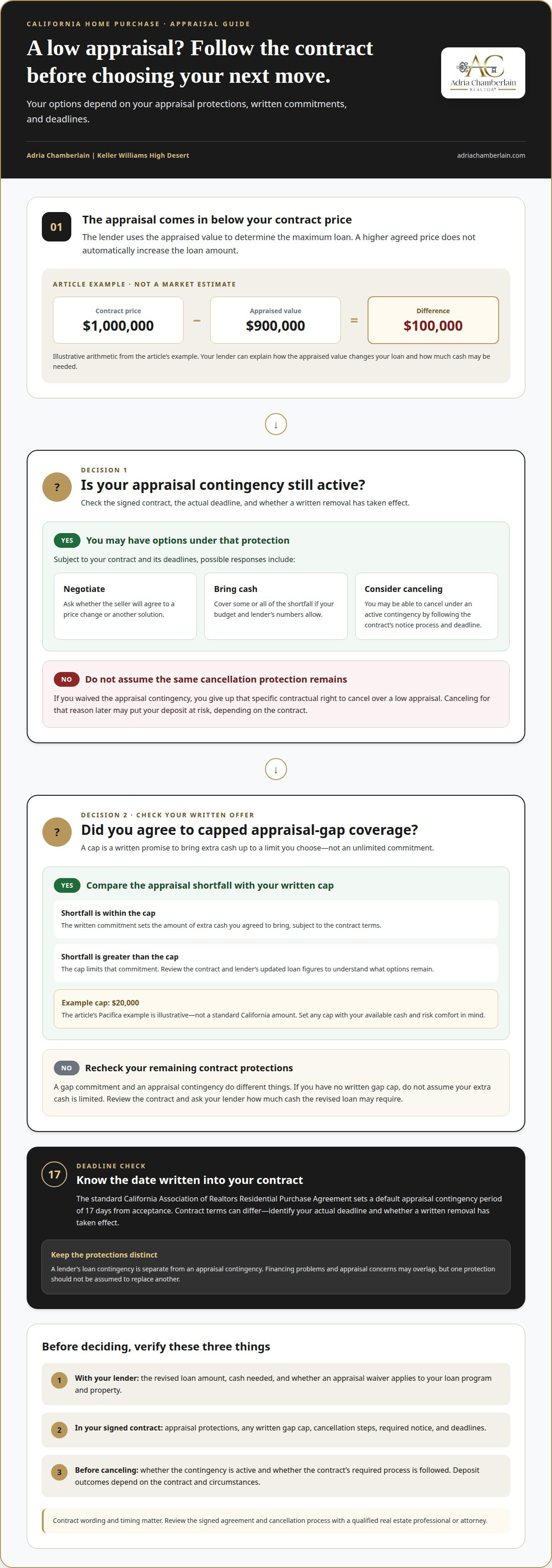
An appraisal gap is the difference between your contract price and the lender’s appraised value. An appraisal contingency sets out your options if the value falls short, so understand both before buying.
Capped Appraisal Gap Coverage
Capped coverage is a written promise to bring extra cash if the appraisal is low, up to a limit you choose. It can help a seller accept your offer without requiring you to cover an unlimited gap. For example, a Pacifica multiple-offer scenario uses a $20,000 cap. That figure is an example, not a standard California amount; the cap needs to match your cash budget.
Using Cash to Cover a Shortfall
Covering the shortfall means bringing funds beyond your planned down payment when the appraisal is below the contract price. Lenders use the appraised value to determine the maximum loan, so a higher agreed price doesn’t automatically increase the loan amount. Before offering cash, ask your lender how the lower value affects your loan and calculate whether you’ll still have enough for closing.
Appraisal Gaps Versus Appraisal Contingencies
An appraisal gap is a difference in value; an appraisal contingency is a contract protection related to that difference. If the contingency remains active, you may be able to seek a price change, bring more cash, or cancel, subject to the signed contract and its deadlines. Gap coverage instead commits you to pay an agreed amount. Review both before accepting the offer’s financial risk.
An escalation clause can raise your offer above competing offers, while appraisal-gap language can cap how much extra cash you’ll contribute. Read the provisions together: a higher final contract price can create a larger potential gap. Set the cap in writing and consider what happens if the shortfall exceeds it. This gives the seller a defined commitment and sets a clear limit for you.
For FHA, VA, and conventional loans, don’t assume the same appraisal strategy works for every program. Appraisal waivers depend on the loan program and property data, while underwriting terms can affect how a shortfall is handled. Ask your lender to explain the loan amount based on the appraised value, whether a waiver applies, and what options remain if the appraisal comes in low.
There’s no single typical California gap amount. A $20,000 Pacifica example illustrates one possible cap, not a statewide norm; your limit should reflect your available cash and comfort with risk. Before agreeing, ask your agent how the contract defines the cap and deadlines, and ask your lender how much cash you’d need at different appraisal values. Also clarify whether the earnest money deposit is protected if you cancel under an active contingency.
What Happens if a California Home Appraisal is Low?
A low appraisal can affect the lender’s loan amount and your options under the signed purchase contract. Your contingency status, written deadlines, and reason for canceling all matter when assessing deposit risk.
Contingency Terms and Deposit Protection
A contingency is a contract condition that gives a buyer a defined option if a specified issue arises. California purchase contracts set contingency terms and deadlines, including appraisal-related protections. An active home-purchase contingency may protect the deposit when a buyer cancels for a covered reason within the agreed period. The exact wording and timing in your signed contract matter.
For example, a home contracted at $1 million might appraise at $900,000. The lender bases the loan on the appraised value, leaving the buyer to consider negotiating, adding cash, or using an applicable contingency. A low appraisal alone doesn’t establish what happens to the deposit; the contract and cancellation process govern that question.
Walking Away and Recovering a Deposit
If your appraisal contingency remains active, you may be able to cancel in writing before it expires and recover your earnest money deposit. The outcome depends on the purchase contract, the circumstances, and whether you follow the required cancellation process. Review the contract and cancellation steps with a qualified real estate professional or attorney. Track the deadline and required notice, since deciding to walk away and properly exercising a contractual right are not the same step.
Before canceling, compare the appraisal result with the contract’s appraisal and loan provisions. Your lender can explain how the low value affects financing, while the contract identifies your protections and time limits. If you’re considering a price change or seller credit instead, keep discussions within the transaction timeline. Seller credits may also be subject to underwriting limits that vary by loan type.
Removal, Waivers, and Deposit Risks
Removing a contingency means giving up that specific contractual protection; waiving it means agreeing not to rely on it. If you waive the appraisal contingency, you give up that contractual right to cancel over a low appraisal. Canceling later for that reason may put your deposit at risk, depending on the contract.
The standard California Association of Realtors Residential Purchase Agreement sets a default appraisal contingency period of 17 days from acceptance. Contract terms can differ, so identify the actual deadline and whether a written removal has taken effect. A lender’s loan contingency is separate: financing problems and appraisal concerns may overlap, but one protection shouldn’t be assumed to replace another.
Before a deadline, ask your lender for information about the revised loan amount and cash needed. Then review the contract’s cancellation and notice terms with your real estate agent. Keep the appraisal, lender communications, and written notices together. If you’ve already removed a contingency, don’t assume the earnest money is automatically refundable; the deposit outcome depends on the contract and circumstances.
Competitive offer strategies that retain buyer protections
A competitive California offer can show commitment without leaving every appraisal risk with the buyer. Appraisal gap contingency strategies for California home buyers can preserve the appraisal contingency, define a cash cap in writing, and set deadlines that align with the lender’s readiness. These terms tell the seller what you can do if the appraised value falls below the purchase price, without making an open-ended promise to cover the gap.
Appraisal protection gives you a contract-based way to respond when the lender’s valuation is low. Depending on the signed terms, you may negotiate a lower price, bring additional cash, or cancel within the contingency period. A seller may find a clear, limited commitment easier to assess than an uncertain promise. A cap helps only if the amount is affordable and the wording clearly defines your obligation.
Build the offer around decisions you can support, rather than removing every protection to appear competitive. For instance, a California offer scenario keeps appraisal protection and considers a 17-day loan contingency. A shorter inspection period may strengthen timing without directly waiving appraisal rights, but only if inspections can be completed in time.
- Set an appraisal-gap cap that reflects cash you can actually access.
- Keep the appraisal deadline and loan contingency terms clear and coordinated.
- Use an escalation clause carefully, since a higher purchase price can enlarge a possible appraisal gap.
- Ask the lender to explain how a lower appraised value changes the loan amount.
An escalation clause can raise your offer above a competing offer, subject to its stated terms. Pairing it with a capped appraisal commitment can limit the extra cash you agree to provide. The cap should state the maximum contribution and connect it to the appraised value, rather than imply you’ll cover any difference. That distinction matters if the escalated price exceeds the lender’s valuation.
Before submitting, ask your lender, “Please provide the estimated loan amount if the appraisal is below the purchase price.” Also ask what funds you would need for the proposed cap. Then review the written contingency language, deadlines, and escalation terms with your agent. A clear offer helps the seller assess your price, appraisal commitment, and timeline together.
Preserving protection doesn’t mean every contingency must remain unchanged. It means choosing each deadline and commitment deliberately. For example, shortening an inspection period may be more manageable than waiving appraisal protection, depending on access and scheduling. If the appraisal later falls short, an active contingency may give you room to renegotiate or use another contract option before the deadline.
Risks of waiving an appraisal contingency
Waiving the appraisal contingency removes a contract protection tied to a low valuation. If the lender’s appraisal comes in below the agreed purchase price, you may lose the specific contractual right to cancel because of the appraisal. The seller may view a waiver as a stronger offer, but you take on more financial exposure. Weigh that risk against your available cash before agreeing.
The lender bases the loan on the appraised value, not simply the higher contract price. If you waive appraisal protection, you may need to cover the difference with cash, negotiate with the seller, or find another solution permitted by your agreement. Financing approval based on earlier information may not resolve the shortfall.
The pressure can extend beyond the gap itself. A larger cash contribution may affect funds you planned for closing or other home-purchase needs. Ask your real estate agent to explain how the signed agreement addresses appraisal, financing, deadlines, and cancellation. These are separate questions, even when the same low appraisal affects them.
Waiving an appraisal contingency also changes the deposit picture. If you waive this protection, you give up the specific contractual right to cancel because of a low appraisal. Canceling later for that reason may put your earnest money deposit at risk. The outcome depends on the signed contract and circumstances, so don’t assume the deposit will automatically be returned.
A capped appraisal-gap clause offers a different balance. Rather than agreeing to cover any shortfall, you commit to a stated maximum amount. A written cap can limit that commitment, but its amount should reflect your available cash and comfort with risk, not an assumed regional standard. If the appraisal gap exceeds the limit, the contract’s remaining protections and wording become especially important.
Before deciding, compare three things: your accessible cash, the lender’s revised loan estimate, and the contract’s cancellation deadlines. Then consider whether a capped commitment could support your offer without removing the appraisal contingency. Ask how an appraisal waiver, if available for your loan and property data, would change the transaction. A waiver of the lender’s appraisal requirement and a buyer’s contractual contingency are not interchangeable.
Questions to resolve before signing include:
- What loan amount would the lender base on a lower appraised value?
- How much cash could you contribute without exceeding your agreed limit?
- What does the contract say if the gap is larger than a written cap?
- Which contingency deadlines remain active, and how could cancellation affect earnest money?
For a California home purchase, don’t treat “competitive” as a reason to accept unlimited exposure. Compare a written cap with the protections that remain in your agreement. If the numbers don’t work for your budget, renegotiating or preserving the contingency may be more appropriate than promising cash you can’t comfortably provide.
Appraisal contingencies and low appraisal options
A low appraisal doesn’t leave you with only one way forward. Your contract, lender’s review, available cash, and the seller’s response shape your options before closing. Use the contract timeline to weigh each response.
Appraisal Contingencies After a Low Valuation
An appraisal contingency sets out a buyer’s contractual options if the lender’s valuation falls below the agreed price. If it remains active, it may allow you to renegotiate, bring additional cash, or cancel under the contract. The timing matters: appraisal contingencies commonly allow about 14 to 21 days to obtain an appraisal and address a gap. Check the deadline and notice requirements in your signed agreement.
Options Following a Low Appraisal
After a low appraisal, you can ask the seller to reduce the price, contribute cash, request a lender review, or cancel if the contract permits. A second appraisal or review appraisal is at the lender’s discretion and generally depends on the circumstances. A reconsideration request can include relevant sales, photos, permits, and explanations of appraisal adjustments.
For a reconsideration, recent closed sales from within the past 90 days can help support the request. The lender submits relevant information to the appraiser; the appraiser may review it, but a different value isn’t assured. Focus on comparable homes and clear factual differences, such as condition or property features. This gives the lender useful material to provide more information during its review.
Renegotiating can help bridge the difference without requiring you to fund the entire gap. The seller might reduce the purchase price, or both sides might agree to share the shortfall. A seller credit is another possibility, but underwriting limits vary by loan type. Ask your lender how a proposed credit affects the transaction before relying on it.
If the lender permits another appraisal or review, ask what circumstances support that option and what information it needs. The lender determines the maximum loan using the appraisal, so a new review matters only if it changes the valuation or financing terms. Keep the contingency deadline in view while considering a review, negotiation, or cash contribution. A request alone doesn’t extend a contract deadline.
Before choosing a response, compare the appraisal with relevant closed sales and review the loan impact with the lender. Local comparable sales may help buyers prepare for a pricing discussion. Contact Adria to discuss local sales and how they relate to the property’s agreed price.
Each option has a different effect on cash, timing, and the chance of closing. Use the written contract to identify what remains available, then coordinate any proposed change with the seller and lender. Making a clear decision before the contingency expires can help you avoid losing a contractual option while the appraisal issue is still being addressed.
Adria Chamberlain | Keller Williams High Desert: Home-Buying Considerations
When weighing appraisal terms, cash limits, and contract protections, buyers may want to consider how each affects a purchase. If a low appraisal changes your expected loan amount, ask your lender about financing implications and review your options with qualified professionals. A Home Valuation & Comparative Market Analysis (CMA) uses local comparable sales to help assess a property’s price.
Whether you’re preparing an offer or responding to an appraisal, gather your questions about the contract, contingency deadlines, and lender’s figures. Your lender is the right resource for financing details. Contact Adria Chamberlain | Keller Williams High Desert to discuss your home search and ask about available guidance.
Make your next offer with a clear comfort limit
Before writing an offer, decide what level of appraisal risk fits your finances and priorities. A useful appraisal-gap contingency strategy for California home buyers starts with that personal boundary, then reflects it in the offer terms. Weigh local comparable sales, your planned cash contribution, and the protections you want to keep. Your lender can explain how financing changes if the appraisal differs from the purchase price, while a real estate professional can help you understand the offer language and local context.
For support with these decisions, you can contact Adria Chamberlain | Keller Williams High Desert to discuss your questions and priorities. If you’re also considering buying or selling, share your plans and ask what guidance may be available. The right conversation depends on your needs and next steps.
Contact Adria Chamberlain | Keller Williams High Desert to discuss your goals and the questions you want answered. A thoughtful, well-informed next step can help you move forward with greater clarity.
Frequently Asked Questions
Can a seller refuse to lower the price after a low appraisal in California?
Yes. A seller can decline a buyer’s request to reduce the price. The appraisal doesn’t automatically change the purchase agreement. If negotiations stall, your next options depend on the agreement’s active contingencies, deadlines, and any written appraisal-gap commitment. You may need to decide whether to bring additional funds or use a contractual cancellation option before its deadline.
Final Thoughts: Do You Need an Appraisal Contingency?
An appraisal contingency may be valuable if you want a contractual option when the lender’s valuation falls short. Whether to keep it depends on your comfort with the possible cash difference, your financing, and the terms you’re willing to accept. Before signing, compare these factors with your budget and the purchase agreement. Your lender can explain loan effects, and your agent can clarify offer terms.
How Common Is a Home Appraisal Contingency?
Appraisal-related contingencies appear in standard California purchase contracts, but buyers and sellers can negotiate their terms. Their use varies by market and offer. If you’re considering a home in Apple Valley, Hesperia, Victorville, Adelanto, Oak Hills, Helendale, Barstow, Phelan, Pinon Hills, or Lucerne Valley, focus on the specific agreement rather than assuming practices in another area apply.
How long does the buyer have to respond to a low appraisal in California?
The deadline in the signed purchase agreement controls. The standard California Association of Realtors Residential Purchase Agreement has a default appraisal contingency period of 17 days from acceptance, but the parties may agree to different terms. That period is not necessarily an extra response window after receiving the appraisal. Review the contract’s dates and notice requirements promptly, and coordinate with your agent and lender before a deadline passes.
Should You Ever Waive the Appraisal Contingency?
Waiving can be a considered choice if you understand the financing and can manage the potential cash difference. Before agreeing, ask your lender to model the loan using a lower appraised value, then compare the funds needed with your available cash. Review the agreement’s other protections separately. A strong offer should reflect what you can afford, not just what might appeal to the seller.
What happens if both parties can't agree on a price after a low appraisal?
If negotiations fail, the parties may proceed only if they agree on terms and you can meet the financing and cash requirements. Otherwise, your remaining choices depend on the signed contract and active contingencies. If cancellation is permitted, follow the agreement’s notice process and deadline. Without an applicable protection, canceling may put your earnest money deposit at risk.
What is an appraisal gap contingency in a California home purchase?
The phrase usually describes offer language addressing who pays when the appraised value is below the agreed price. It may state that the buyer will contribute cash toward some or all of that difference, sometimes up to a written cap. For example, if a contract price exceeds the appraisal by $10,000, the clause’s wording determines whether the buyer covers that amount or only a stated portion.
How can buyers calculate the cash needed to cover an appraisal gap?
Subtract the appraised value from the agreed purchase price to find the initial gap. Then ask your lender to recalculate the loan using the appraised value, since your total cash requirement also depends on the loan terms and planned down payment. Account for any negotiated price change or written cap before deciding what you can contribute.


