

A probate property can be sold before the estate is fully settled, but the sale may not be the final step. The time needed to complete a California probate estate varies, so if you’re asking how long it takes to sell real estate through probate in California, the answer depends on the sale process and the estate’s remaining obligations.
It’s understandable to expect the home sale to determine when heirs receive their share. Court confirmation, possible overbids, creditor and tax payments, and whether the property must go through probate can all affect the timing.
This guide explains how a California probate sale works and what can move it forward or cause delays. You’ll learn how court approval and overbids affect the process, why estate payments can delay final distribution, and when a property may transfer without full probate. This context helps set realistic expectations and clarify where a real estate professional can support the sale.
Key Takeaways
- Court confirmation and potential overbids can add steps between accepting an offer and completing a sale.
- Whether the property must go through probate depends on how it was owned and the estate’s circumstances.
- A home sale may happen before heirs receive proceeds because estate debts, creditor claims, and taxes still need attention.
- Delays can stem from court scheduling, disputes, property appraisals, or complications in settling the estate.
- Understanding the sale authority and the property’s probate status can help clarify what happens next.
How Does the Court Confirmation and Overbid Process Work?
California probate can take many months from filing to closing, and complicated cases may take longer. A home sale can finish before the estate closes because these are separate milestones. Timing depends on when the court appoints the executor, the authority granted, whether confirmation is required, and how soon a hearing can be scheduled.
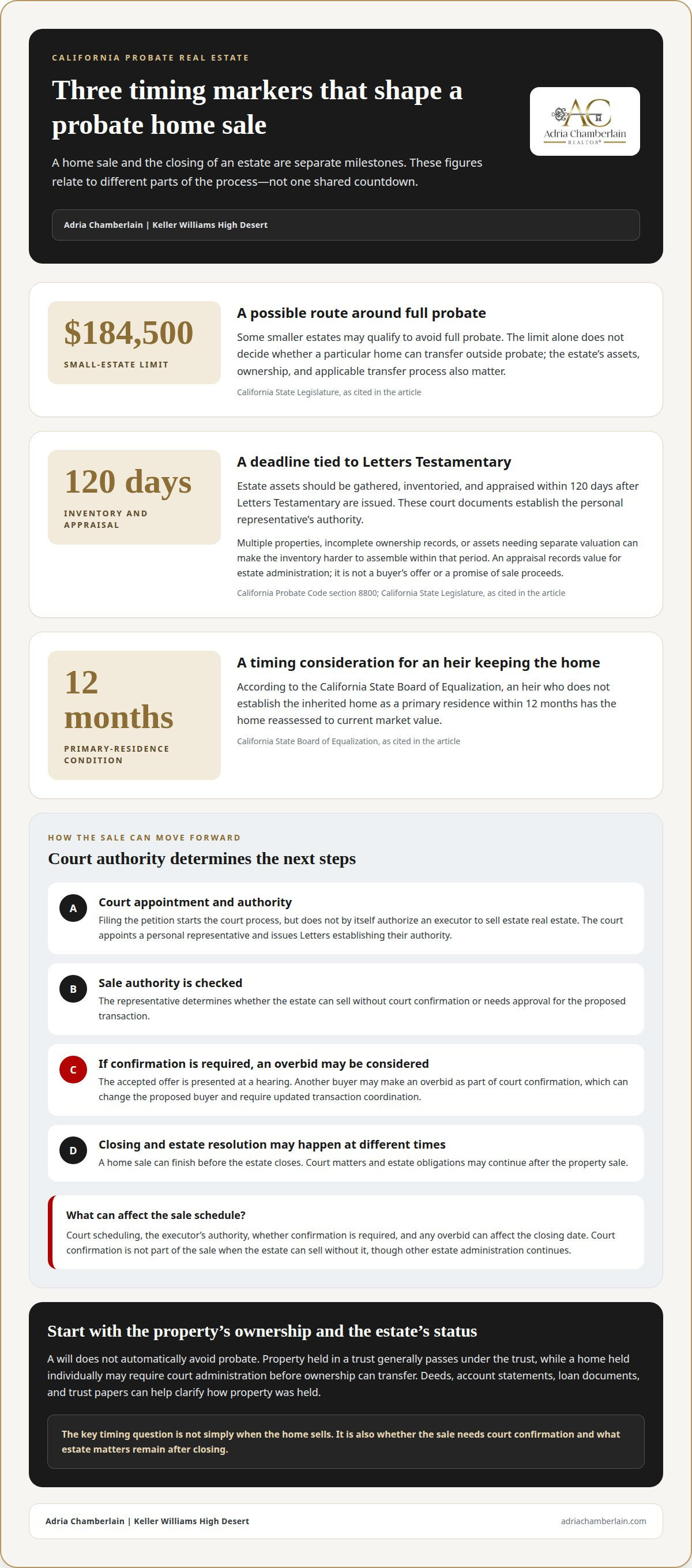
Filing the petition starts the court process, but it does not by itself authorize an executor to sell estate real estate. The court must appoint a personal representative and issue Letters establishing their authority. The representative then determines whether the estate can sell without court confirmation or needs approval for the proposed transaction. Each step depends on the case filings and court proceedings.
If court confirmation is required, the accepted offer is presented at a hearing. The court-confirmation process can allow another buyer to make an overbid, potentially changing who purchases the home. This creates another decision point after an offer is accepted. The representative and buyer must account for the hearing and any change to the proposed sale before moving toward closing.
Overbids are not simply higher offers negotiated privately between seller and buyer. They take place as part of court confirmation, when the judge considers the sale and competing bids. A new bid may change the proposed buyer and require updated transaction coordination. If the estate can sell without court confirmation, this court step is not part of the sale, though other estate administration continues.
The sale schedule and the estate schedule can therefore diverge. An executor may be working toward a property closing while the estate still has court matters or obligations to resolve. For an heir considering whether to keep an inherited home, tax treatment may also be relevant: according to the California State Board of Equalization, an heir who does not establish the inherited home as a primary residence within 12 months has the home reassessed to current market value.
To understand the likely timing in a specific case, identify the estate’s current court status and sale authority. Then find out whether the offer needs confirmation and whether a hearing still needs to be scheduled. These milestones give a clearer picture than treating the probate case and property sale as one continuous deadline. Court scheduling, the executor’s authority, and any overbid can each affect the closing date.
Does the estate need to go through probate?
Whether a California home must pass through probate depends on how the deceased person owned it and how the estate is structured. A will states the person’s wishes, but having one does not automatically avoid probate. Property held in a trust generally passes under the trust rather than through probate. A home held individually may require court administration before ownership can transfer.
Some smaller estates may qualify to avoid full probate. According to the California State Legislature, the small-estate limit potentially allowing an estate to avoid full probate is $184,500. That amount alone doesn’t determine whether a particular home can transfer outside probate. The estate’s assets, their ownership, and the applicable transfer process all matter. A house held jointly may be treated differently from one held solely by the deceased person.
Start by identifying what the deceased person owned and owed. Deeds, account statements, loan documents, and trust papers can help establish ownership of each asset. This information can show whether the home belongs to the estate or may pass through another arrangement. It can also reveal missing records that need attention before the probate case moves forward.
In a probate case, the personal representative prepares an inventory and appraisal. A probate referee appraises estate assets that require formal valuation. The appraisal records a value for estate administration; it is not a buyer’s offer or a promise of sale proceeds. The time required depends on the estate’s size, available records, and how readily each asset can be identified and valued.
California Probate Code section 8800 addresses the Inventory and Appraisal filing obligation. According to the California State Legislature, estate assets should be gathered, inventoried, and appraised within 120 days after Letters Testamentary are issued. Letters are court documents establishing the personal representative’s authority. Multiple properties, incomplete ownership records, or assets requiring separate valuation can make it harder to assemble the inventory within that period.
A documented appraisal gives the probate case a record of the property’s value for administration. For a home, the probate referee’s valuation becomes part of the estate records. If the deed, trust papers, and inventory suggest different ownership arrangements, those differences may need resolution before the representative decides how to handle the property.
A clear inventory helps establish the next step, but does not authorize a sale by itself. If no trust or other transfer method applies, someone may need a court appointment before acting for the estate. The key early question is not simply whether the deceased person left a will. It is whether the home’s title and estate documents require court-supervised administration.
What Is a Probate Sale in California?
A probate sale is the sale of real estate owned by a deceased person’s estate during probate administration. A court-appointed personal representative handles estate matters, including the property sale, within the authority granted by the court. The sale can happen while other administration continues, so the home’s closing and the probate case’s final resolution may occur at different times.
Several steps can affect the path from preparing the property to closing. The representative may need to gather ownership and property records, arrange an appraisal, and determine the sale authority. If court confirmation is required, the accepted offer must go through a hearing before the sale can proceed. Court scheduling, incomplete documents, or an objection can add time.
Disagreements can also slow administration. Beneficiaries, for example, might dispute the will, the representative’s decisions, or how the property should be handled. A dispute may require further communication and legal proceedings before the estate can move forward. An attorney can help the representative address legal questions, while the real estate transaction still depends on clear authority, accurate property information, and a buyer able to complete the purchase.
Property issues can create separate delays. Unclear title records, unresolved liens, or belongings that need attention may have to be addressed before closing. A buyer may also need time for due diligence, such as reviewing available property information and arranging financing. These tasks can overlap with probate administration, but a problem in one area may hold up the next step.
An insolvent estate, where debts exceed available assets, can complicate decisions about a property sale. The personal representative must understand the estate’s obligations and resources before determining what can be distributed. If the home is a major estate asset, its sale may help clarify the funds available for administration. The proceeds still need to be recorded and considered alongside the estate’s other financial information.
Tax administration can affect when an estate is ready to close. Preparing a federal estate tax return may require gathering records about the deceased person’s assets and the property transaction. The return and related correspondence are separate from the buyer’s closing, so the real estate sale may finish while tax matters remain open. Organized estate and sale records support the representative’s accounting.
For families, the practical distinction is between completing the real estate transaction and finishing probate administration. A delay may stem from court action, a beneficiary dispute, title documents, estate obligations, or tax filings. Identifying the outstanding step helps explain why the property sale or final distribution has not moved forward and what needs attention next.
Creditor and tax payments before heirs receive proceeds
Beneficiaries may wait for proceeds after a home closes because the personal representative must account for estate debts, claims, and taxes. Notices, claim periods, and court scheduling all shape this part of the probate timeline.
California probate notices and initial court hearings can take several weeks, while the creditor claim period lasts at least 4 months. The exact sequence depends on when Letters are issued, when notices are delivered, and the court’s calendar.
Notifying Beneficiaries and Creditors
Notice formally informs beneficiaries and creditors that a probate case is underway and explains how they may participate. It matters because the personal representative needs to identify interested parties and give creditors an opportunity to raise claims before distributing estate property.
The representative’s inventory helps show what the deceased person owned and owed. Notices and estate records should clearly identify the original owner and relevant assets. If a creditor receives notice later than others, that timing may affect the creditor’s claim deadline and the estate’s payment planning.
Creditor Claims and Deadlines
A creditor claim is a request for payment from the estate for a debt owed by the deceased person. According to the California State Legislature, creditors must be given at least 4 months to file claims against an estate.
The general deadline is the later of 4 months after Letters are first issued or 60 days after notice of administration is mailed or delivered to a creditor. That timing matters because the personal representative needs to allow for claims before calculating what may remain for beneficiaries. A claim can require review and affect the estate’s available funds.
Notice, Claim, and Hearing Timelines
This timeline combines delivery of notices, the creditor claim period, and court dates. A California probate petition and hearing setting commonly take 4–12 weeks, with the court’s schedule affecting the hearing date. Those early steps happen separately from the period creditors have to file claims.
For example, if Letters are issued before a creditor receives notice, the later deadline may be determined by comparing the two applicable dates. The personal representative must track both rather than assume every claim period ends on the same day. A hearing may also take place while claims remain open, so a scheduled court date does not necessarily mean the estate is ready for distribution.
Estate debts and creditor claims are addressed before remaining property is distributed. In the described California probate timeline, debts and creditors are handled during weeks 24 to 32, while estate tax filing and payment may occur during weeks 24 to 52. The personal representative uses the inventory, claim information, and tax records to account for obligations before determining what remains for beneficiaries. This explains why a completed sale and a buyer’s payment don’t automatically mean heirs receive proceeds immediately.
Selling or managing real estate during probate
California real estate may be sold during probate, but the representative needs authority to act. Whether court confirmation is required depends on the authority granted and the sale process.
Delaying a sale can mean ongoing costs, including insurance, utilities, maintenance, and property taxes, while the estate is administered.
After the court appoints a personal representative and issues Letters, the representative can handle estate matters within that authority. The property’s inventory and appraisal also help document the home as an estate asset. If the home is ready to sell, the representative can consider timing alongside estate claims, the property’s condition, and any required court steps.
Not every California probate sale requires court confirmation. Under the Independent Administration of Estates Act, a representative with full authority may sell property without court confirmation after notifying interested parties. A four-to-six-month sale timeline is not guaranteed, and no source or circumstances are provided here to support it as a general estimate. Actual timing depends on the estate and sale process. If confirmation is required, a court hearing and possible overbids add steps after an offer is accepted.
Keeping the property instead of selling can also affect administration. The home may need ongoing upkeep while claims and other estate matters are addressed. Whether a new probate referee appraisal is needed if the property remains on the market for over a year depends on the circumstances; confirm the requirement with the estate’s attorney or probate referee.
For an inherited home, timing may also matter to an heir’s plans. The claim that an heir must establish an inherited home as a primary residence within 12 months to avoid reassessment is not verified here and should not be relied on as a general rule. Property tax treatment depends on the circumstances; consult the California State Board of Equalization or a qualified tax professional. That consideration is separate from the sale process and may be relevant when weighing whether to retain or sell the property.
The main risks of delay are carrying expenses, changing property condition, additional administration, and a longer wait before proceeds can be distributed. The estate’s needs, sale authority, property condition, and claims all affect the timing. A lawyer can advise on legal authority and estate obligations; a real estate professional can help assess the sale process and property positioning. For guidance on a probate property sale, discuss your home sale options.
Adria Chamberlain | Keller Williams High Desert: Probate & Trust Home Sales Information
Families preparing to sell an estate property may need to understand the steps involved in a probate or trust sale. This can be useful once the personal representative understands the property’s sale authority and is ready to consider moving from probate administration toward a sale.
For a home in Apple Valley, Victorville, Hesperia, Adelanto, Oak Hills, Helendale, Barstow, Phelan, Pinon Hills, Lucerne Valley, or a surrounding High Desert community, a home valuation and comparative market analysis (CMA) may help assess the property’s market position. Listing a residential property is a possible next step when the estate is ready to bring the home to market. The sale plan can account for the property’s condition and probate process without treating the court timeline as a guaranteed closing date.
If you’re considering a probate or trust property sale, contact Adria Chamberlain | Keller Williams High Desert to discuss your situation.
Plan the next step with a clear view of the property
Before setting expectations with family, identify the immediate real estate decision: prepare the home for sale, assess its current condition, or consider whether retaining it better fits the beneficiaries’ plans. Those choices shape what information is useful next. A market assessment can help frame the property’s position, while the personal representative remains responsible for decisions tied to estate authority and administration.
If you’re considering how long probate may take to sell real estate in California, focus on the next milestone rather than treating the whole process as one deadline. The next step may be confirming sale authority, preparing the property, or deciding how to proceed with an interested buyer. An estate attorney can address legal questions, while real estate guidance can help with the home and sale process.
Connect with Adria Chamberlain | Keller Williams High Desert to discuss the property and your next real estate step. A thoughtful plan can make a complex transition feel more manageable.
Frequently Asked Questions
Can probate finish before the creditor-claim period ends?
Usually, the estate cannot complete final distribution until the creditor-claim period has passed and claims are addressed. According to the California State Legislature, creditors must have at least 4 months to file claims. A home sale can close during that period, but the personal representative still needs to account for possible debts before distributing remaining proceeds. For example, an accepted offer does not itself resolve an outstanding creditor claim.
How can you speed up the estate administration process?
Keep administration moving by organizing ownership, financial, and tax records early and responding promptly to requests from the court or personal representative. Clear documentation can help prevent delays caused by missing deeds, incomplete asset information, or uncertainty about beneficiaries. For example, finding a trust document and current property records early can clarify which steps apply. A probate lawyer can advise the representative on court filings and estate obligations.
Is There a Time Limit on Selling an Inherited Property in California?
California has no hard legal deadline for selling an inherited home. Timing may depend on whether the property is part of probate, the representative’s authority, and the estate’s needs. An inherited property may also have ongoing expenses while it remains unsold. If it has been on the market for over a year, a new probate referee appraisal may be needed, adding another valuation step.
What Factors Determine How Long Probate Takes?
The estate’s complexity, court scheduling, property ownership records, creditor claims, and beneficiary disputes can all affect the timeline. A straightforward estate with clear records and agreement among interested parties has fewer issues to resolve. Multiple assets, contested documents, or questions about who may act for the estate can add work. Timing also depends on whether the property sale requires court confirmation and whether tax matters remain open.
What if there is no will?
If there is no will, someone generally must petition the court to be appointed as the estate’s administrator before handling probate matters. A relative may take on that role, but the court appointment establishes who can act for the estate. The administrator gathers information about the deceased person’s assets and debts, then manages the case through the applicable process. A lawyer can explain how California rules apply to the family’s circumstances.
What is the Probate Process?
Probate is the court-supervised process for handling a deceased person’s estate. It generally involves filing a petition, appointing a personal representative, identifying and valuing estate assets, addressing claims and taxes, and distributing what remains to beneficiaries. The exact tasks depend on the estate and how its property was owned. For a house, the representative also needs authority to manage the sale and transfer title through the appropriate process.
How long can it take to sell a house during California probate?
A California probate sale with full authority under the Independent Administration of Estates Act is described as taking four to six months from listing to closing. A sale requiring court confirmation can take longer; the hearing may be scheduled 8–12 weeks after an offer is accepted. These periods describe different sale steps, not necessarily the time until the estate is fully settled or beneficiaries receive distributions.
What factors delay a California probate real estate sale?
Common delays include missing title or property records, a dispute among beneficiaries, unresolved claims, and a court calendar that pushes back a required hearing. A buyer’s due diligence or an overbid at confirmation can also change the path to closing. Estate tax matters may extend administration; a federal estate tax return can add 6 to 8 months while the IRS responds. Each delay affects a different part of the transaction or estate process.


