

What if the first step toward selling an inherited home isn’t deciding what it’s worth, but clarifying who has authority to make decisions? For families searching for guidance on “selling an inherited house with siblings California,” disagreements about whether to sell, keep the property, or prepare it for market can feel personal, especially while upkeep and expenses continue. It helps to separate shared family choices from decisions that depend on the legal authority in place.
It’s understandable to want a clear answer quickly. Taking time to confirm who can act and hear each sibling’s priorities can help the family move forward with fewer surprises. This guide explains how to clarify decision-making, compare a sale with keeping the home or buying out a sibling’s interest, and plan around the property’s condition and local market context. You’ll also find practical ways to organize the conversation and next steps. Adria Chamberlain, a local REALTOR® with experience in probate and trust home sales, can help families consider the real estate aspects of their options.
Key Takeaways
- Separate family discussions about what to do with the home from questions about who has legal authority to act.
- Clarify whether the property is being handled through probate or a trust, since these are different processes.
- Compare selling, keeping shared ownership, and a sibling buyout by considering upkeep, timing, and ongoing responsibilities.
- For selling an inherited house with siblings California, create a shared record of questions, decisions, documents, and agreed responsibilities.
- Assess the home’s condition and local market context before deciding how to prepare for a sale; Adria can guide the real estate planning.
Selling an Inherited House With Siblings in California: Start With the Shared Decision
A family home can hold decades of memories, and deciding what happens to it after a loss can bring grief into an already complicated conversation. One sibling may feel ready to sell, while another hopes to keep the house connected to the family. Before debating price, repairs, or timing, pause to establish the facts. Inheritance, ownership, and legal authority to sell are related, but they may not belong to the same people.
A will may describe who is meant to inherit, while title records show how the property is currently held. A trust or court-supervised estate process may also affect who is authorized to act. The details depend on the documents and circumstances, so a family conversation alone may not settle who can sign or make decisions. A useful starting point for selling an inherited house with siblings in California is to understand the property’s ownership and decision-making structure before agreeing on a sale plan.
Why siblings can see the same inherited house differently
One heir may feel attached to the home; another may want to resolve ongoing expenses or move forward with other plans. A sibling who lived nearby or handled upkeep may view the property differently from someone who was less involved. Those differences don’t necessarily mean anyone is being unreasonable. Before comparing outcomes, give each person room to explain their priorities, concerns, and hopes for the house.
If a discussion reaches a standstill, it may be worth understanding the legal options. In some co-ownership disputes, a court-ordered sale known as a partition action may be relevant. Whether that process applies to a particular inherited property is a legal question. Siblings should discuss it with a California probate or estate attorney rather than treat it as an automatic solution.
What to clarify before discussing a sale
Start by gathering the available records: whose names appear on the property title, whether a trust or estate is involved, and what the will or other estate documents say. Keep property records and estate paperwork together so siblings can refer to the same information. Being named as an heir doesn’t, by itself, answer every question about who owns the home or who can act for an estate.
Write down gaps or conflicting information instead of guessing. If it’s unclear who has authority, or how probate or trust administration affects a potential sale, ask a California probate or estate attorney to explain the family’s situation. Once those questions are addressed, siblings can have a more grounded conversation about whether selling, keeping, or another option makes sense.
California Inherited Property: Clarify Ownership and Authority Before Listing
Before making listing plans, distinguish three roles that can overlap but aren’t automatically the same. An heir or beneficiary may be entitled to inherit under a will or trust. A title owner is identified in the property’s ownership records. An authorized estate representative, such as an executor or trustee, may have responsibilities for handling estate or trust assets. The documents, title status, and any court orders help determine who can act.
Confirming title and authority first helps the family avoid treating an inheritance as automatic permission to sell. Probate and trust administration are different processes, and neither should be assumed based on family expectations alone. For an overview of the California probate process, California Courts provides general information. A probate or estate attorney can explain how the rules apply to the particular property and documents.
Does an inherited house have to go through probate?
There isn’t one answer for every inherited home. Whether probate is involved can depend on how the property was owned, what estate documents exist, and other facts specific to the family’s situation. A trust may provide a different administration path from a will handled through probate. Don’t rely on a general rule or assume that a particular process is required or unnecessary. Ask a qualified California probate attorney to review the circumstances.
Which sibling can make decisions about the property?
A sibling named as executor in a will or trustee in a trust has a different role from a sibling who is a beneficiary or listed as a co-owner. The name alone may not answer what authority exists. Relevant documents, court orders, and title status can all matter. Before accepting an offer or signing sale documents, have a California probate or estate attorney clarify who is authorized to act and what approvals may be needed.
For families selling an inherited house with siblings in California, it’s important to keep the real estate plan separate from the legal-authority question. Once the appropriate decision-maker and process are clear, a real estate professional can help assess the home’s condition, local market context, and sale preparation. Adria’s experience with probate and trust home sales can support that property-focused planning. For inherited home sale guidance, families can explore how Adria can help with the real estate steps while legal questions remain with their attorney.
Sell, Keep, or Buy Out a Sibling: Compare the Main Options
Once the family understands who can act, the next question is which outcome fits the heirs’ goals. A sale can create a defined transition, while keeping the property means continuing to share responsibility. A buyout may allow one sibling to keep the home, but it requires agreement on value and clear arrangements for the transfer. The decision isn’t only whether to sell. It’s also whether the family can support its preferred option over time.
Keep the family’s preference separate from legal and financial guidance. An attorney can explain legal and estate considerations, and a tax or financial professional can address relevant tax or financial questions. The California Courts’ guide to property after someone dies offers general information about handling a deceased person’s property, but it can’t determine what applies to an individual family.
When selling the inherited house may fit the family’s goals
A sale may suit heirs who want to conclude shared ownership rather than coordinate decisions and upkeep indefinitely. For example, siblings in Apple Valley may have different plans for the home, or some may live far away and prefer not to remain involved in its ongoing care. That’s an illustration, not a statement about local market conditions. How proceeds are handled depends on the legal and financial circumstances, so clarify those questions with qualified professionals.
What to consider before keeping or buying out an interest
Keeping the home requires a practical plan for who will occupy it, handle upkeep, arrange insurance, and make future decisions. Shared ownership may work if siblings can agree on responsibilities and stay in communication; it can become difficult if expectations differ or participation is uneven. Talk through routine responsibilities as well as the long-term plan before deciding to hold the property.
If one sibling wants to buy out another’s interest, the family will need an agreed approach to valuing that interest and professional guidance on the documents involved. A real estate professional can help the family understand the home’s condition and local market context, while legal and financial professionals advise on their respective areas. Adria can help heirs compare the property-sale considerations so the family can weigh its options with clearer information.
How Siblings Can Coordinate the Sale and Prepare the Home
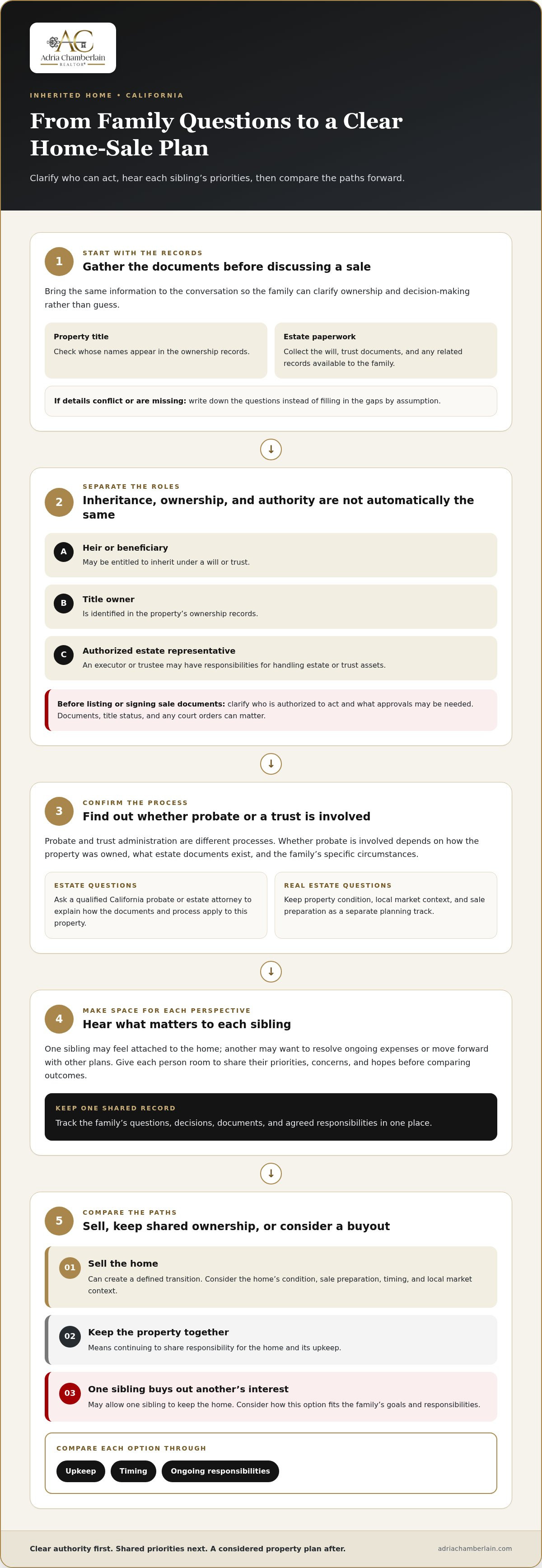
A shared plan can turn a difficult family conversation into manageable next steps. Once the appropriate authority is clear, siblings can align on their goals, review the home’s condition, and decide how to prepare it. Keep legal or estate questions separate from practical sale-readiness discussions. If a decision about who can act remains unresolved, pause that part of the plan until the family receives qualified legal guidance.
Create one shared record, such as a document or folder, for questions, decisions, estate and property records, and agreed responsibilities. For each task, note who will handle it and when the family will revisit open items. A single record helps prevent misunderstandings, especially when siblings live in different places or can’t attend every conversation.
Create a workable communication and decision plan
Agree on how updates will be shared, how siblings will record decisions, and who will serve as the point of contact for property-related information if everyone is comfortable with that arrangement. Keep a separate list of questions that require an attorney’s input. This makes it easier to track sale preparation without confusing practical choices, such as clearing a room, with decisions about legal authority or the estate.
Prepare the inherited home for a realistic sale plan
Before removing belongings or arranging work, document the home’s visible condition and identify items that require family agreement. Siblings might sort personal belongings first, then discuss whether cleaning, repairs, or other preparation makes sense. Avoid assuming that every improvement is necessary. The plan should reflect the property, the family’s priorities, and informed advice.
A local comparative market analysis (CMA) can help siblings discuss pricing by reviewing comparable properties and local market context. It’s an informed reference, not a promise of a particular sale price or result. For a home in Apple Valley, Victorville, or Hesperia, relevant comparisons may differ from those for a property elsewhere in the High Desert, including Adelanto, Barstow, Helendale/Silver Lakes, or Phelan. Ask that any market information used in the discussion be current and clearly dated.
Families can keep the process more orderly by moving through the steps together: confirm who can act, agree on priorities, assess the home, and record the next decisions. Adria can help heirs review property condition, local market context, and sale preparation as they consider listing. Request guidance for an inherited home sale.
Plan the California Sale With Local Guidance and Clear Next Steps
A considered sale plan follows a clear order: clarify who has authority to act, make space for each sibling’s priorities, assess the home, and then discuss preparation and listing decisions. Keeping those steps in sequence helps the family focus on the question in front of them without overlooking estate-specific issues that need professional advice.
For families selling an inherited house with siblings in California, local real estate guidance can help turn property questions into practical next steps. Adria Chamberlain’s work includes residential listings and probate and trust home sales in High Desert communities such as Apple Valley, Victorville, and Hesperia. Her role is to help the family consider the real estate side of the decision, not to determine legal authority, tax treatment, or how an estate should distribute proceeds.
What a real estate consultation can help the family understand
A property-focused conversation can cover the home’s visible condition, potential sale-preparation considerations, and local market context. A comparative market analysis (CMA) reviews relevant comparable properties to support a more informed pricing discussion. It’s a planning tool, not a guarantee of what a home will sell for. Legal authority and estate documents belong with a qualified attorney; tax treatment and financial questions should go to the appropriate qualified professional.
A simple first step for High Desert heirs
Before discussing the next stage, gather the property and estate documents available to the family. Ask each sibling to write down priorities and unresolved questions. That preparation can help make a conversation about the home more focused and keep property planning distinct from legal or tax decisions.
Adria can help heirs consider property condition, local market context, and possible preparation steps as they decide whether listing is right for the family. If you’re ready to talk through the property and your family’s selling goals, contact Adria for personalized selling guidance.
Take the Next Step With a Clear Family Plan
Families can approach selling an inherited house with siblings in California more confidently when they separate legal authority from family preferences, compare selling with keeping or buying out an interest, and agree on practical steps for the property. Start with the available estate and title information, then record the siblings’ priorities and questions. A qualified legal or tax professional can advise on estate-specific matters, while local real estate guidance can help the family consider the home’s condition, preparation, and market context.
Adria Chamberlain is a licensed REALTOR® affiliated with Keller Williams High Desert and has served High Desert and Inland Empire communities since 2017. Her real estate experience includes probate and trust sales. If your family is ready to discuss the home and its selling goals, contact Adria to talk through your inherited property.
You don’t have to settle every question at once. A thoughtful first conversation can help your family find a respectful way forward.
Frequently Asked Questions
Can siblings sell an inherited house in California if everyone agrees?
Agreement can help the family move toward a sale, but it doesn’t by itself establish who has legal authority to act. The answer can depend on title, estate documents, and whether the home is part of a trust or probate estate. Before listing or signing documents, confirm the decision-making authority with a qualified California probate or estate attorney. A real estate professional can then help the family consider sale preparation and local market context.
What happens if siblings disagree about selling an inherited house?
If siblings disagree, first separate each person’s priorities from unresolved questions about ownership or authority. A written record of concerns and possible options can help make discussions more focused. If the family remains at an impasse, consult a California probate or estate attorney about rights and possible legal steps. The available options depend on the specific ownership and estate circumstances. Avoid making property decisions based on assumptions about what one heir can require.
Does an inherited house in California always have to go through probate?
No, probate isn’t required in every situation. Whether it applies depends on factors such as how the property was owned, the estate documents, and other case-specific facts. A trust and a probate estate involve different processes, so don’t assume one applies without reviewing the records. A qualified California probate attorney can explain the process for the family’s circumstances and whether additional steps may be needed before a sale.
Can one sibling buy out the others’ interests in an inherited home?
Potentially, if the relevant heirs or owners agree and the transaction can be completed under the applicable legal and financial arrangements. The family will need an agreed method to value the interests and professional guidance on documenting any transfer. Consider who would occupy and maintain the home, cover ongoing responsibilities, and make future decisions. An attorney and appropriate financial or tax professional can advise on the details for the family’s situation.
How is an inherited house valued when siblings plan to sell it?
A real estate professional can prepare a comparative market analysis (CMA), which reviews comparable properties and local market context to inform a pricing discussion. It’s a useful reference, not a guarantee of sale price. The home’s condition and relevant property details also matter. If heirs need a valuation for legal, estate, tax, or other formal purposes, ask the appropriate qualified professional what type of valuation is suitable for that purpose.
Do all siblings have to sign the California home sale documents?
Not necessarily. Who signs depends on the property’s title, the estate or trust documents, and who is authorized to act. A sibling may be an heir without being a title owner or estate representative, while another person may have authority under relevant documents or court orders. Don’t assume every sibling must sign, or that one sibling can sign for everyone. Have a qualified California attorney clarify the requirements before documents are signed.
Can we sell an inherited house in California while probate is ongoing?
It may be possible in some circumstances, but the answer depends on the estate, the property’s ownership, the representative’s authority, and any applicable court requirements. Probate being underway doesn’t automatically establish that a sale can proceed or identify who can approve it. Before accepting an offer or signing sale documents, ask the estate’s California probate attorney to explain the steps and permissions that may apply to this specific property.
What should siblings do first when they inherit a house in the High Desert?
Begin by gathering available title, estate, and property records, then list each sibling’s priorities and unanswered questions. Clarify who has authority before making listing decisions, and keep legal or tax questions with qualified professionals. For families selling an inherited house with siblings in California, local property guidance can help assess condition, preparation considerations, and market context. This applies across Apple Valley, Hesperia, Victorville, Adelanto, Oak Hills, Helendale, Barstow, Phelan, Pinon Hills, and Lucerne Valley.


