
A 1% listing fee can lower the amount paid to the listing agent, but it doesn’t automatically settle the total commission. In Apple Valley, commissions are negotiable, and any compensation offered to a buyer’s agent is a separate decision. The comparison between 1 percent listing fee brokers and full commission agents in Apple Valley, CA comes down to the agreed fees and the services included.
It’s reasonable to focus on the percentage when estimating what you might take away from a sale. To compare options fairly, look at how each fee is calculated, whether buyer-agent compensation is included in the arrangement, and what support the listing service provides.
This guide explains the commission math with clear examples, outlines the difference between 1% and full-commission arrangements, and offers a decision guide for Apple Valley sellers. That way, you can weigh the potential savings against the work and guidance you want throughout the sale.
Key Takeaways
- Learn how listing-side and buyer-side compensation affect a seller’s overall commission calculation.
- Use sale-price examples to compare how different commission arrangements can change estimated proceeds.
- Understand why a 1% listing fee doesn’t automatically determine whether buyer-agent compensation is included.
- Weigh a discount brokerage’s potential savings against the services and support provided in its listing agreement.
- Use a home valuation and comparative market analysis to help frame a listing plan for your Apple Valley property.
How Is Real Estate Commission Calculated?
California real estate commission is calculated by applying an agreed rate to the sale price. The seller and listing agent negotiate the listing-side fee, while buyer-agent compensation is a separate amount. Rates aren’t fixed by law or an association. A written listing agreement records the seller’s fee and service terms, so review how the fee is calculated and what work it covers before signing.
That calculation doesn’t establish what a seller will pay overall. Buyer-agent compensation is a separate negotiated term, and the seller may choose whether to offer it. The actual total depends on the written agreements and transaction terms.
A 1% listing fee refers to the listing agent’s compensation. It doesn’t automatically include buyer-agent compensation. If the seller agrees to pay toward the buyer’s agent, that payment is negotiated separately and documented outside the MLS or in the contract. A seller can also decide not to offer buyer-agent compensation.
| Compensation option | Who receives it | What the seller should understand |
|---|---|---|
| Negotiated listing fee | Listing agent’s side | The written agreement should state the fee and listing services. |
| Seller-paid buyer-agent compensation | Buyer’s agent’s side | This is separately negotiated, not automatically included in a 1% listing fee. |
| No seller-paid buyer-agent compensation | No seller payment for that side | Compensation can be addressed through the buyer’s agreement and transaction terms. |
Buyer-agent agreements are another part of the calculation. Under the NAR settlement changes described in the article, buyers must sign a written buyer-broker agreement before touring homes with an MLS-participant agent, effective August 2024. The agreement sets out the buyer-agent compensation arrangement. Buyers should understand those terms before beginning home tours.
A seller concession is a contribution offered during negotiations to help address a buyer’s costs. It’s separate from the listing fee, and its amount and terms depend on the transaction agreement. In California, a buyer may receive a rebate from seller-paid commission, provided the rebate is disclosed to the seller.
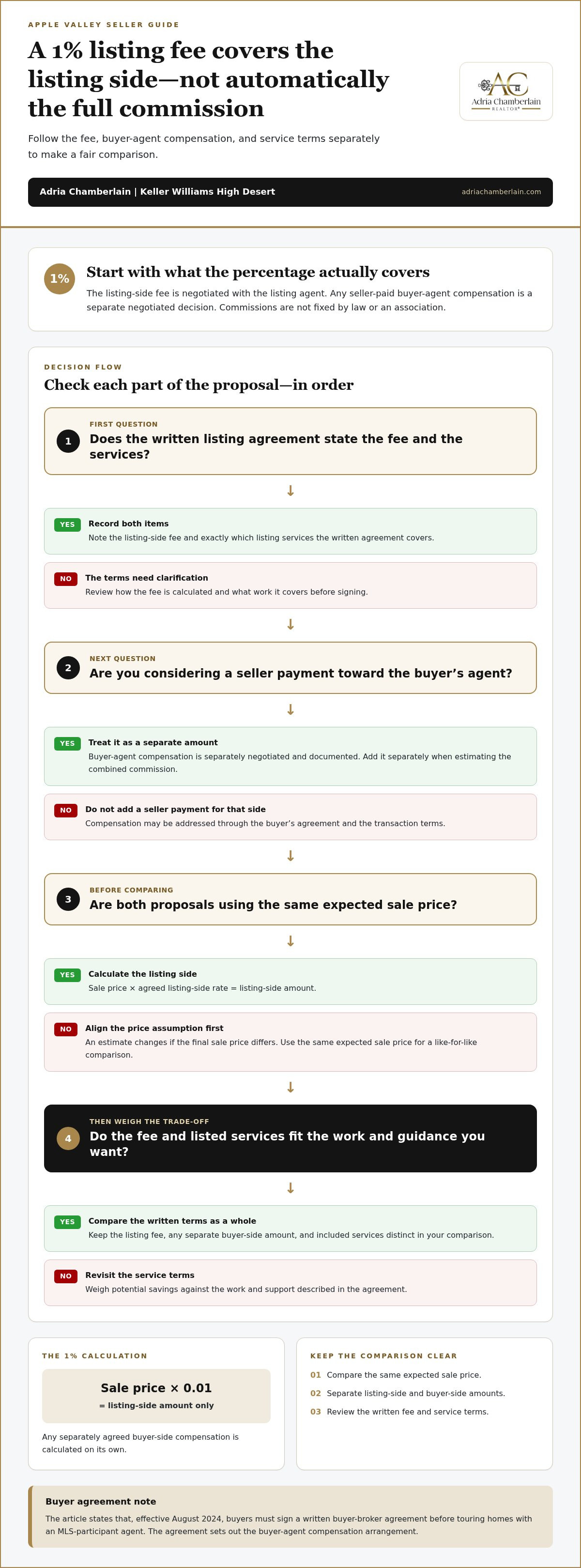
To compare Apple Valley proposals, identify the listing-side fee, any proposed buyer-agent payment, and the services included. Then calculate each amount using the same expected sale price. This makes it easier to compare the full written terms instead of relying on a headline percentage alone.
Commission calculations using a California home sale price
A commission estimate starts with the sale price and the rate written into the relevant agreement. For an Apple Valley comparison, separate the listing-side amount from any buyer-side compensation before assessing the total.
National and California Commission Rates
National and California averages offer broad context, but they don’t determine the rate for an individual home sale. An average combines transactions with different negotiated terms, so it may not reflect an Apple Valley seller’s agreement. For a useful comparison, focus on the proposed rate, which side it applies to, and the services described in the agreement, rather than treating a broad average as a quote.
California Home Prices and Commission Amounts
A percentage-based commission changes with the sale price. To calculate it, multiply the sale price by the agreed rate expressed as a decimal. For example, a 1% listing-side rate uses 0.01 as the multiplier. This gives the listing-side amount only; any separately agreed buyer-side compensation must be calculated on its own before estimating the combined commission.
When reviewing a proposal, identify the price used in its calculation. An estimate based on an expected sale price will change if the final sale price differs. Also note whether the stated percentage represents the listing side or combined compensation. These distinctions help prevent comparing one brokerage’s listing fee with another proposal’s total commission.
California Seller-Side Benchmarks
A seller-side benchmark is a reference for comparing listing compensation, not a fixed charge for a particular property. Check that it measures the listing side rather than the combined amount for both sides. Then compare it with the proposed fee using the same sale-price assumption and calculation basis.
A practical worksheet can keep the comparison clear. Record the expected sale price, the listing-side rate, and the resulting amount. Add any separate buyer-side payment only if the seller is considering it. Keep other sale expenses outside the commission calculation so the figures remain easy to compare. This avoids treating an overall transaction estimate as the listing agent’s compensation.
For Apple Valley sellers, the most useful estimate reflects the property’s expected sale price and the actual proposed terms. A statewide average can’t show how a particular brokerage structures its listing agreement. Compare the written calculation, included services, and any separate compensation terms side by side. That gives you a consistent basis for evaluating different commission approaches without relying on averages as personal estimates.
How Are 1% Listing Fees and Post-NAR Changes Revolutionizing Real Estate?
A lower listing fee changes one part of the seller’s transaction, but it doesn’t automatically determine total compensation. Apple Valley sellers can compare the listing fee, any buyer-agent payment, and the services described in each agreement.
Commission Negotiation
Real estate commissions are negotiable and aren’t set by law or an association. Sellers can discuss the listing-side fee with an agent, while buyer-agent compensation is a separate term. The National Association of REALTORS® settlement-related MLS rules took effect August 17, 2024. Under those rules, offers of buyer-agent compensation aren’t displayed on the MLS. This applies to MLS listings, not to the parties’ ability to negotiate compensation separately.
Negotiating Listing Fees
A 1% listing fee applies to the listing agent’s side; it doesn’t define the full transaction cost. Compare the fee with the services listed in the agreement, then consider any separately negotiated buyer-agent compensation.
The comparison depends on using the same sale price and buyer-agent amount in each calculation.
Before weighing proposals, separate the main terms:
- Listing fee: Record the agreed percentage or amount for the listing agent’s side.
- Buyer-agent compensation: Treat it as a separate negotiated term, not an automatic part of a 1% fee.
- Services: Compare the responsibilities and support described in each listing agreement.
Settlement-related rules also require buyers to sign a written buyer-broker agreement before touring homes with an MLS-participant agent. That agreement sets out the buyer-agent compensation arrangement. Any seller contribution is negotiated separately and may be documented in the transaction contract.
For an Apple Valley seller, compare the complete written proposals rather than headline percentages. Calculate each potential amount using the same sale-price assumption, then weigh the services and responsibilities in each agreement. This makes potential savings easier to assess against the support offered during the sale.
Traditional real estate commission structure
Traditional commission structures often involve separate listing-side and buyer-side compensation. The total commission rate, payment arrangement, and resulting amounts depend on negotiated terms.
Combined Commission Estimates
Historically, before the post-2024 changes described, traditional total real estate commission typically ranged from 5% to 6% of a home’s final sale price. This combined estimate differs from a single-side benchmark because it counts both sides.
Who Pays Agent Commissions
The seller may agree to pay the listing agent’s fee and separately agree to cover buyer-agent compensation. A seller isn’t required to include buyer-agent payment in the listing fee. Any seller-paid buyer-agent amount is negotiated outside the MLS or documented in the contract. These choices affect the seller’s transaction costs, while the buyer-agent agreement sets out the buyer’s compensation arrangement.
Types of Real Estate Commissions
A percentage-based commission applies a rate to the final sale price. A flat-fee arrangement uses an agreed fixed amount, while a tiered structure applies different rates to portions of the price. One example uses 6% on the first $3 million and 4% on the remainder. These structures differ in how the fee changes as the sale price changes.
The commission calculation starts with the agreed rate and price basis. The actual allocation depends on the agreements, so the total rate alone doesn’t show each agent’s gross share.
Brokerage splits further distinguish gross commission from an agent’s earnings. Those amounts illustrate the effect of the brokerage arrangement; they aren’t extra charges added to the seller’s negotiated commission.
For an Apple Valley comparison, write down the listing-side fee, any seller-paid buyer-agent amount, and whether quoted figures represent one side or both. Then calculate each amount using the same sale price. This helps distinguish the total commission from the individual agreements that shape who receives it.
What is a discount real estate broker?
A discount broker uses a lower or differently structured commission rate than a traditional full-service model. For Apple Valley sellers comparing 1 percent listing fee brokers versus full commission agents, the key is to look beyond the advertised rate and compare the written agreement.
Discount and Full-Service Brokerage Models
A discount model centers on reducing or restructuring the listing-side fee. A full-service model generally emphasizes broader agent support, but the label alone doesn’t define which tasks are included. For a 1% listing fee, review what the agreement covers, including transaction communication and closing coordination. The written terms, rather than the headline rate, set expectations for the working relationship.
Discount Brokerage Advantages and Drawbacks
A lower listing fee can reduce that part of a seller’s commission calculation. The tradeoff depends on the service arrangement: a limited-service model may leave more tasks to the seller, while another model may include additional support. Compare responsibilities, communication, and transaction assistance in writing. A lower rate is useful when the included work fits your needs during the sale and closing.
Apple Valley Discount Broker Comparisons
Reviews and sale results belong to individual brokerages, not to every Apple Valley 1% broker as a group. Compare feedback tied to the named realtor and consider relevant transaction records, while remembering that one seller’s experience doesn’t predict another’s. Before choosing, ask what the listing fee includes, who handles each stage, and how the agreement addresses buyer-agent compensation. This keeps the comparison focused on actual terms and service.
Discount Broker Fee Structures
A discount broker may charge a percentage-based listing fee, a flat fee, or use another written structure. A 1% fee means the listing-side charge is calculated at 1% of the sale price; it doesn’t automatically include buyer-agent compensation. Compare the fee basis, included services, and any separate negotiated amounts before estimating the total.
For example, multiply the expected sale price by 0.01 to estimate a 1% listing-side fee, then review any separate compensation terms. Apply the same sale-price assumptions when comparing 1 percent listing fee brokers versus full commission agents in Apple Valley, CA. Don’t compare commission rates alone; include the work assigned to the agent and seller, plus the transaction support described in each agreement.
Before signing, ask the realtor to explain the fee calculation, included services, and any additional compensation terms. Then compare those written terms with the support you want through closing. Apple Valley sellers seeking guidance on a listing plan can discuss an Apple Valley home sale.
Adria Chamberlain | Keller Williams High Desert: Home Valuation & Comparative Market Analysis (CMA)
Adria Chamberlain | Keller Williams High Desert can help Apple Valley sellers connect commission comparisons with a clearer view of their home’s potential market position. A Home Valuation & Comparative Market Analysis (CMA) provides a basis for considering a listing price alongside the terms of a proposed listing agreement. It can help you assess how different commission arrangements may affect estimated proceeds at a chosen sale price, without treating a market estimate as a guaranteed result.
For sellers preparing to list, Adria’s Residential Property Listing Services offer a next step for discussing the sale and its listing terms. If you’re weighing broker options or planning a home sale in Apple Valley, contact Adria Chamberlain | Keller Williams High Desert to talk through your questions.
Choose a listing approach that fits your next move
Choosing between 1 percent listing fee brokers and full commission agents in Apple Valley, CA is ultimately about matching the agreement to your priorities. Consider how involved you want to be, what guidance would help you feel prepared, and which responsibilities you want clearly defined before moving forward. A thoughtful choice can make the selling process feel more manageable from the first conversation through closing.
Before deciding, write down the questions that matter most to you. Use them to compare service terms and understand how each approach fits your plans, property, and preferred level of support. You don’t need to settle every detail at once; a focused conversation can help clarify what to consider next.
For personalized guidance on your Apple Valley real estate plans, contact Adria Chamberlain | Keller Williams High Desert. Take the next step at a pace that feels right for you.
Frequently Asked Questions
How Much Can You REALLY Save With a 1% Listing Fee in 2026?
The comparison doesn’t include other sale expenses. To estimate potential savings, apply each proposed rate to the same expected sale price and include any separately negotiated buyer-agent compensation.
So who actually pays?
The seller pays the listing-side fee agreed to in the listing agreement. The seller may also agree to contribute toward buyer-agent compensation, but that payment is negotiated separately and is optional for the seller. A buyer’s written agreement with their agent describes the buyer-agent compensation arrangement. For a specific transaction, review the listing agreement, buyer-broker agreement, and contract terms together to see who agreed to pay each amount.
It does not account for other transaction expenses or changes to the negotiated amounts.
How Much Could You Save in California?
There isn’t one fixed savings amount for every California seller. The calculation compares those assumptions, not guaranteed terms for a particular sale.
Which Apple Valley CA real estate brokers offer a 1% listing fee?
No specific Apple Valley brokerage is identified here as offering a standard 1% listing fee. Rates are negotiable, and a fee arrangement is set through the agreement between the seller and brokerage. A useful comparison focuses on the written listing fee, included services, and whether buyer-agent compensation is separate. Adria Chamberlain | Keller Williams High Desert offers residential property listing services.
What is the typical full-service listing commission rate in Apple Valley CA?
No fixed Apple Valley rate applies to every listing. The research describes 5% to 6% as a traditional total commission range historically, but that total may include both listing-side and buyer-side compensation. It isn’t an Apple Valley quote or a required rate. For a meaningful comparison, distinguish the listing-agent fee from any separately negotiated buyer-agent payment and review the services in the written agreement.
How much would a 1% listing fee versus a full commission cost at different Apple Valley home prices?
These are illustrative calculations, not quotes. Each assumes the same rates at every sale price and excludes other closing expenses.
Do 1% listing brokers charge separate upfront, transaction, or closing fees?
Those charges are determined by the brokerage’s written agreement, so the 1% figure alone doesn’t establish whether separate fees apply. Before signing, review the agreement for the listing fee, any additional transaction charges, when amounts are due, and what services they cover. Compare the total stated charges with the compensation arrangement, rather than treating the advertised percentage as the complete cost of selling.


