

Start downsizing before a move becomes urgent. That gives you time to sort belongings, compare housing options, and plan the transition at your own pace. For seniors downsizing a home in Apple Valley, CA, the process can take several months to over a year, depending on how much needs sorting and when the move is planned.
It’s understandable to want clear answers before making such a personal change. This guide explains how to compare a smaller home, a rental, or senior living; organize belongings and important documents; find a real estate agent familiar with senior transitions; and decide when to start.
You’ll also learn how to plan the order of the home sale and move, including what to consider when choosing a new place to live. A manageable plan lets you make decisions one step at a time while keeping your priorities at the center of the transition.
Key Takeaways
- Compare a smaller home, rental, and senior living option by weighing daily routines, access to care, and closeness to family.
- Look for an agent familiar with senior transitions who can help you understand the home-sale process and plan its timing.
- Sort belongings in manageable stages, and decide early what to keep, pass on, donate, or discard.
- Coordinate the move and home sale around your priorities, including the time needed to prepare and choose your next home.
- Before making decisions about capital gains or property taxes, identify the questions that apply to your situation and discuss them with a qualified tax professional.
Choosing a smaller home, rental, or senior living community
Compare daily needs, upkeep, and access to family before choosing a new home. In Apple Valley, the right fit depends on how you want to live.
Comparing Smaller Homes and Senior Living
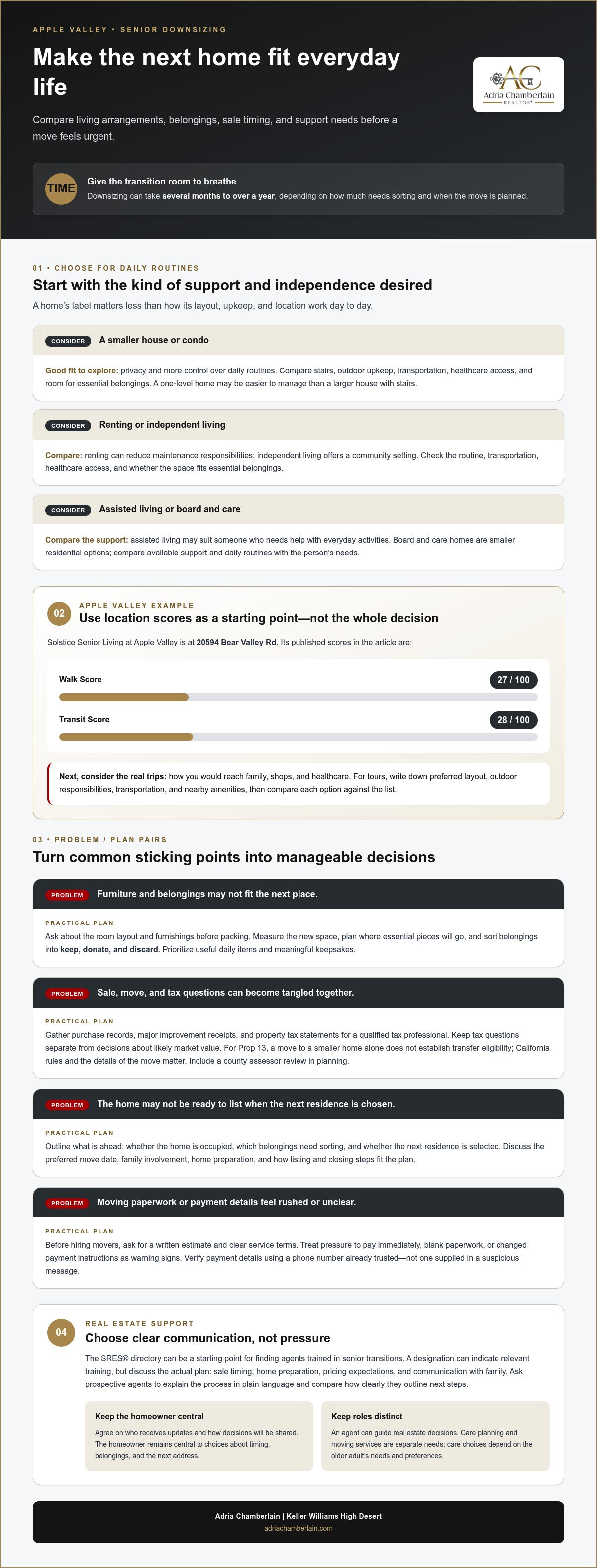
A smaller house or condo may suit seniors who want privacy and control over their daily routines. Renting can reduce maintenance responsibilities, while independent living offers a community setting. Assisted living may suit someone who needs support with everyday activities. Compare stairs, outdoor upkeep, transportation, healthcare access, and space for essential belongings. For example, a one-level home may be easier to manage than a larger house with stairs.
Before hiring movers, ask for a written estimate and clear service terms. Treat pressure to pay immediately, blank paperwork, or changed payment instructions as warning signs. Confirm payment details using a phone number you already trust, not one supplied in a suspicious message.
Exploring Apple Valley Community Options
Apple Valley choices include senior living communities, board and care homes, and age-restricted or gated neighborhoods. Board and care settings are smaller residential options; compare the available support and daily routine with the person’s needs. Solstice Senior Living at Apple Valley is at 20594 Bear Valley Rd. Its Walk Score is 27 out of 100, and its Transit Score is 28 out of 100. Use those scores as starting points, then consider how you would reach family, shops, and healthcare.
If you’re considering a senior or gated community, write down the features you want before touring. Think about the home layout, outdoor responsibilities, transportation, and nearby amenities. Compare each Apple Valley option against your list instead of relying on the community’s name or appearance alone.
Planning for Unneeded Belongings
Ask about the room layout and furnishings before packing. A furnished apartment may leave little room for a full dining set, extra bedroom furniture, or multiple televisions. Measure the new space and plan where essential pieces will go. Then sort items into keep, donate, and discard groups, prioritizing useful daily items and meaningful keepsakes. This helps you avoid moving bulky belongings that won’t fit or serve a purpose.
Reviewing Home Sale and Property Tax Effects
A home sale can raise separate questions about capital gains and property taxes. Gather purchase records, major improvement receipts, and property tax statements before discussing the sale. These documents help a qualified tax professional review your circumstances. For Prop 13, a move to a smaller home alone doesn’t establish whether your existing tax base can transfer. Eligibility depends on California’s applicable transfer rules and the details of your move, so include a county assessor review in your planning. Consider this before committing to a sale and purchase sequence. For the home sale, compare the timing of your next housing choice with the listing and closing steps. Keep tax questions distinct from decisions about the home’s likely market value.
Finding a senior-transition real estate agent
A real estate agent experienced in senior transitions can help coordinate the home-sale decisions involved in a move. For older adults in Apple Valley, look for someone familiar with long-term homeowners, changing housing needs, and the practical sequence of preparing, listing, and selling a home. An agent can guide real estate decisions; care planning and moving services are separate needs.
Use the SRES® Directory as a Starting Point
The SRES® directory is one starting point for finding agents trained in senior transitions in Apple Valley. A designation can indicate relevant training, but you’ll still want to discuss your plans. For example, explain whether you’re considering a smaller home, a rental, independent living, or a community with assisted living.
Ask how the agent would approach the sale timeline, home preparation, and communication with family members. If memory care is part of a future housing discussion, keep that decision separate from the real estate plan. The agent can address the property sale, while care choices depend on the older adult’s needs and preferences.
Discuss the Home Sale and Move Sequence
Before choosing an agent, outline the decisions ahead. Note whether the home is occupied, which belongings need sorting, and whether you’ve selected the next residence. These details affect planning. For instance, someone moving into a smaller space may need time to decide what to keep before the home is ready to list.
Ask the agent to explain each real estate step in plain language, including how pricing expectations are formed and what preparation may matter. A useful conversation should clarify which decisions are yours and what information the agent needs. Bring questions about your preferred move date, family involvement, and any property concerns.
Compare Communication and Support
Choose an agent whose communication style suits the older adult, not just the relatives coordinating the move. Agree on who receives updates and how decisions will be shared. A family member may help organize paperwork, while the homeowner remains central to choices about timing, belongings, and the next address.
For a practical comparison, give prospective agents the same scenario: a long-term Apple Valley home, a move to a smaller residence, and a need to coordinate sale preparation. Note how clearly each explains the process. Look for specific next steps, not pressure to make a quick commitment.
Prepare for a First Conversation
Gather basic property details, questions about timing, and a short list of housing preferences. Then discuss how the sale could fit the move plan. For guidance on Apple Valley home-sale planning, a conversation with a local real estate professional can help you understand the property-related steps before making decisions.
Sorting belongings into keep, donate, and discard piles
Start early, while the move still feels manageable, and involve family members in decisions. Sort one space at a time, such as a hall closet or kitchen cabinet, instead of emptying several rooms at once. Label three areas “keep,” “donate,” and “discard.” This simple system helps residents see progress and decide what fits the next home, especially when retirement means moving into less space.
Begin with belongings you use every day. Set aside comfortable clothing, frequently used kitchen tools, personal care items, and important keepsakes. For a move to independent living, compare each item with the new room’s layout and furnishings. A full dining set, spare linens, or duplicate appliances may be unnecessary if the community already provides furnishings or services. Confirm what will be in the new space before deciding what to bring.
For the donate pile, identify usable items that won’t fit the new home, such as a second armchair or extra dishes. Consider local charities that pick up large furniture and household items. Decide what to do with heirlooms early by asking family members if they want particular pieces. Name the intended recipient and record the decision so treasured items don’t become a last-minute source of confusion during packing.
Use the discard pile for broken, damaged, or unusable belongings. Keep personal documents out of it until you’ve reviewed them. Scan important paperwork, save electronic copies, and shred outdated documents. Scan old photographs and negatives to preserve memories without keeping every physical copy. For albums with family notes or original prints, decide which physical pieces matter most before storing or sharing them.
A short inventory makes it easier to revisit decisions. List the furniture, keepsakes, and practical items marked “keep,” then note where each will go. For example, record that a favorite reading chair belongs beside the new room’s window. Photograph a preferred furniture arrangement before packing. Family members can use the inventory to coordinate what they’re taking, donating, or arranging to have picked up.
Keep decisions personal and specific. A resident may choose to keep a small set of familiar dishes, even if the new community provides kitchen items. Someone else may prioritize photo albums or a well-used sewing basket over extra furniture. Set aside uncertain items in a clearly marked area, then revisit them after measuring the new space and discussing family heirlooms. This makes it easier to connect each choice to the next home.
Finish one space before moving to another. In a garage, sort tools, seasonal decorations, and storage boxes separately. In a bedroom, focus on clothing and linens. This keeps the three piles clear and helps family members support the process without taking over decisions. A room-by-room approach also makes it easier to spot what still needs scanning, sharing, donating, or careful packing.
What are the steps and timeline for downsizing from a home to senior living?
Downsizing can take several months to over a year, depending on sorting needs and housing market conditions. Starting early gives Apple Valley seniors time to compare housing, organize the move, and decide how the home sale fits their plans. Use a written schedule to keep decisions moving without treating every task as equally urgent.
- Choose the next home. Identify the preferred senior living option and learn its layout, move-in process, and available furnishings. Use that information to decide what the new space can accommodate. If you’re still comparing communities, include visits and follow-up questions in the schedule before setting a move date.
- Build a room-by-room plan. Set a schedule of one room per week, then assign each room a start date and a clear task. For example, plan to review the guest room before the garage. A visible calendar helps relatives coordinate their time and shows which rooms still need attention.
- Track what’s moving. Create an inventory of belongings intended for the new residence. Record furniture and essential items, and note their destination. Photograph or sketch preferred room arrangements before packing. A picture of the reading chair beside a window, for example, gives movers and family members a practical placement guide.
- Coordinate the home sale. Consider local market conditions when setting pricing expectations and planning a listing. Decluttering before listing can make the home more appealing to buyers while reducing the number of items to move. Map out the sequence of listing, sale steps, and the senior living move so decisions about the new residence inform the sale schedule.
- Arrange move-day support. Professional movers who specialize in senior relocations can handle physical moving tasks. Keep medications, documents, a change of clothes, and daily necessities accessible rather than packing them with household boxes. Arrange unpacking help so the first essentials can be placed in familiar spots.
Use the timeline to identify tasks that can happen at the same time. While one room is being sorted, family members can review the inventory or record preferred furniture layouts. If the home needs extensive decluttering, a professional organizer or Senior Move Manager can help make the work more manageable. These roles differ from a real estate agent, who can help plan property-sale steps and discuss how local market conditions affect timing.
Revisit the schedule if the housing choice or sale plan changes. For example, a later move-in date may allow more time for preparation, while selecting a residence helps clarify which belongings need to go. Keep the calendar, inventory, and contact details together, and update them as you complete each step.
What California rules affect selling a senior's home, capital gains, and property taxes?
A California home sale can raise separate questions about ownership, capital gains, and property taxes. Treat these as related planning topics, not a single calculation. Before setting a sale date, gather records and identify which questions apply to the homeowner. A tax professional can review the financial details, while the county assessor can address property-tax questions.
Organize records before estimating tax effects
Start with the purchase documents, records of major improvements, and recent property-tax statements. These help a tax professional understand the home’s history and discuss possible capital gains. For example, a homeowner who remodeled a kitchen should locate invoices and records of the work. Keep sale-related documents together, too, so estimates can be compared with final records.
Capital gains depend on the homeowner’s circumstances and applicable tax rules. Don’t assume the sale price alone determines the result. A tax professional can review the purchase history, improvements, ownership details, and planned use of the sale proceeds. Ask which records support the calculation and what information is needed before making decisions based on expected proceeds.
Ask how a move affects property taxes
California’s Prop 13 property-tax benefits and a move to a smaller home raise a separate question: can the existing tax base transfer to the next property? Eligibility depends on the applicable California transfer rules and the details of the move. Before committing to a sale and purchase sequence, ask the county assessor to review the homeowner’s situation and explain the required process.
Prepare specific details for that conversation, including the current property address, proposed new home, ownership information, and expected timing. Ask whether the move and replacement property meet the applicable rules. A smaller home alone doesn’t answer the transfer question, so avoid building a budget around an assumed tax amount.
Keep sale planning and tax advice distinct
A real estate professional can help with property-sale planning, including how local market conditions shape pricing expectations and timing. Tax questions require a separate review. For instance, an estimate of sale proceeds doesn’t establish capital gains tax or a future property-tax bill. Keep separate notes on likely sale proceeds, tax questions, and plans for the next home.
Before making a commitment, write down unresolved questions and assign each to the right professional. Ask a tax professional about capital gains and records; ask the county assessor about property-tax transfer rules. For guidance on the property-sale side of your plan, discuss a home sale with Adria. This keeps California tax questions connected to the sale timeline without treating real estate guidance as tax advice.
Adria Chamberlain | Keller Williams High Desert: Home Valuation & Comparative Market Analysis (CMA)
Adria Chamberlain | Keller Williams High Desert can help you assess the home-sale side of a downsizing plan. A Home Valuation & Comparative Market Analysis (CMA) reviews comparable properties to help you understand how your home may fit the Apple Valley market. It can be a useful starting point before deciding when to list or how the sale may fit your move.
If you’re ready to sell, Residential Property Listing Services can support the process of bringing your home to market. If you’re planning to buy a smaller home, discuss how the search fits alongside your sale timeline. A clear conversation about your priorities can help identify your next real estate steps.
Contact Adria Chamberlain | Keller Williams High Desert to discuss your home-sale plans.
Make Your Next Move on Your Own Terms
Start by defining what a comfortable day should look like after the move. Write down the routines, relationships, and familiar comforts you want to preserve. This list can guide you when family members offer different suggestions or a new option appeals for reasons that don’t match your priorities.
A plan for downsizing homes for seniors in Apple Valley, CA, should leave room for personal choice, not just property decisions. Choose one question to resolve first, such as what you want your next home to feel like or which family member can help with a specific task. Small, clear decisions can create momentum without requiring you to settle every detail at once.
If you’re ready to discuss the real estate decisions ahead, contact Adria Chamberlain | Keller Williams High Desert. You can take the next step with your priorities in view and shape a move that feels like your own.
Frequently Asked Questions
When Should I Start Downsizing My Home?
Begin when you’re seriously weighing a move and comparing what you need from a home with what your current property requires. For downsizing homes for seniors in Apple Valley, CA, make a short decision sheet with your preferred living arrangements, features you want to keep, and questions about the sale. This gives family discussions a clear focus before you commit to a particular path.
What senior downsizing services are available in Apple Valley, CA?
Support may include a home valuation and sale representation, household organizing, and moving help. For downsizing homes for seniors in Apple Valley, CA, match each task with the right kind of support. Real estate guidance addresses the home transaction, while an organizer can help plan household decisions and movers can transport belongings.
What local real estate agents specialize in helping seniors downsize in Apple Valley?
Adria Chamberlain | Keller Williams High Desert is a local option for seniors planning a home sale in Apple Valley. Adria is a licensed REALTOR® and provides residential property listing services and home valuations. When discussing your situation, explain who should receive updates and what matters most during the transition. This helps make the real estate conversation relevant to your priorities.


