

What if the heaviest burden of being a successor trustee isn't the stack of legal forms, but the quiet pressure of ensuring every beneficiary feels heard while you manage the family's most significant asset? Stepping into this responsibility often happens during a season of grief. It's natural to feel overwhelmed by the strict 60-day notice requirements or the recent shifts in Proposition 19 tax laws. You want a result that honors your loved one's legacy, but the fear of a technical oversight causing a family rift or a financial loss can be exhausting.
I understand the weight of these decisions, and I'm here to tell you that you don't have to carry them alone. This 2026 guide is built to simplify the process of selling a trust property California, giving you a clear path from the initial valuation to the final closing. I've laid out the essential legal timelines, specific High Desert market strategies for communities like Apple Valley and Victorville, and the practical steps I use to maximize property value while protecting you from personal liability. My goal is to help you move through this transition with confidence and peace of mind.
Key Takeaways
- Understand your legal authority by locating the original Trust Agreement and obtaining a notarized Certificate of Trust to present to title companies and buyers.
- Learn how the specific disclosure exemptions for selling a trust property California can streamline your transaction while you still fulfill your duty to disclose known material defects.
- Discover the practical steps for managing an "As-Is" sale in the High Desert, including how I help you handle estate clean-outs in communities like Apple Valley and Victorville.
- Identify the critical 2026 legal timelines and notice requirements you must meet to avoid personal liability and keep beneficiaries informed throughout the process.
- Find out how partnering with a local expert like Adria provides the steady guidance and accurate market analysis needed to maximize the home's value for the estate.
What Does it Mean to Sell a Trust Property in California?
Selling a trust property California isn't just a standard real estate transaction; it's a specific legal process where a home held in a Revocable or Irrevocable Living Trust is transferred to a new owner. When the original person who created the trust, known as the trustor, passes away or becomes unable to manage their affairs, the job falls to the Successor Trustee. I often describe this role as being the legal manager of the property. You aren't just selling a house; you're acting on behalf of the trust to benefit the people named as heirs.
As a Successor Trustee, you hold a high level of responsibility. This is what legal professionals call a "fiduciary duty." In plain English, it means you're legally required to put the interests of the beneficiaries above your own. You can find more detail on the fiduciary responsibilities of a trustee to understand the standards of care required. It's about being a steady steward of the property while you prepare it for the market, ensuring every decision is transparent and fair.
Successor Trustee vs. Executor: Knowing Your Role
I often hear people use the terms "executor" and "trustee" interchangeably, but they involve different paths. An executor handles a will and usually has to go through a court process called probate. Selling a trust property is generally much faster. The trust document itself gives you the authority to act, so you don't have to wait for a judge's permission or deal with the lengthy court supervision that defines probate sales. Your authority is outlined right in the trust agreement, which serves as your roadmap.
Common Reasons for Selling a Property in Trust
Most trust sales in our High Desert communities happen because the heirs want to distribute the estate's value equally. If a parent leaves a home in Apple Valley or Hesperia to three children, selling the property is often the most practical way to ensure everyone receives their fair share. Other times, I see trustees sell to generate liquidity. This cash is then used to pay off the estate's remaining debts or taxes. Whether you're moving a family home into a liquidation phase or settling estate debts, I'm here to handle the heavy lifting of the sale so you can focus on your family's needs.
Steps for a Successor Trustee Selling California Real Estate
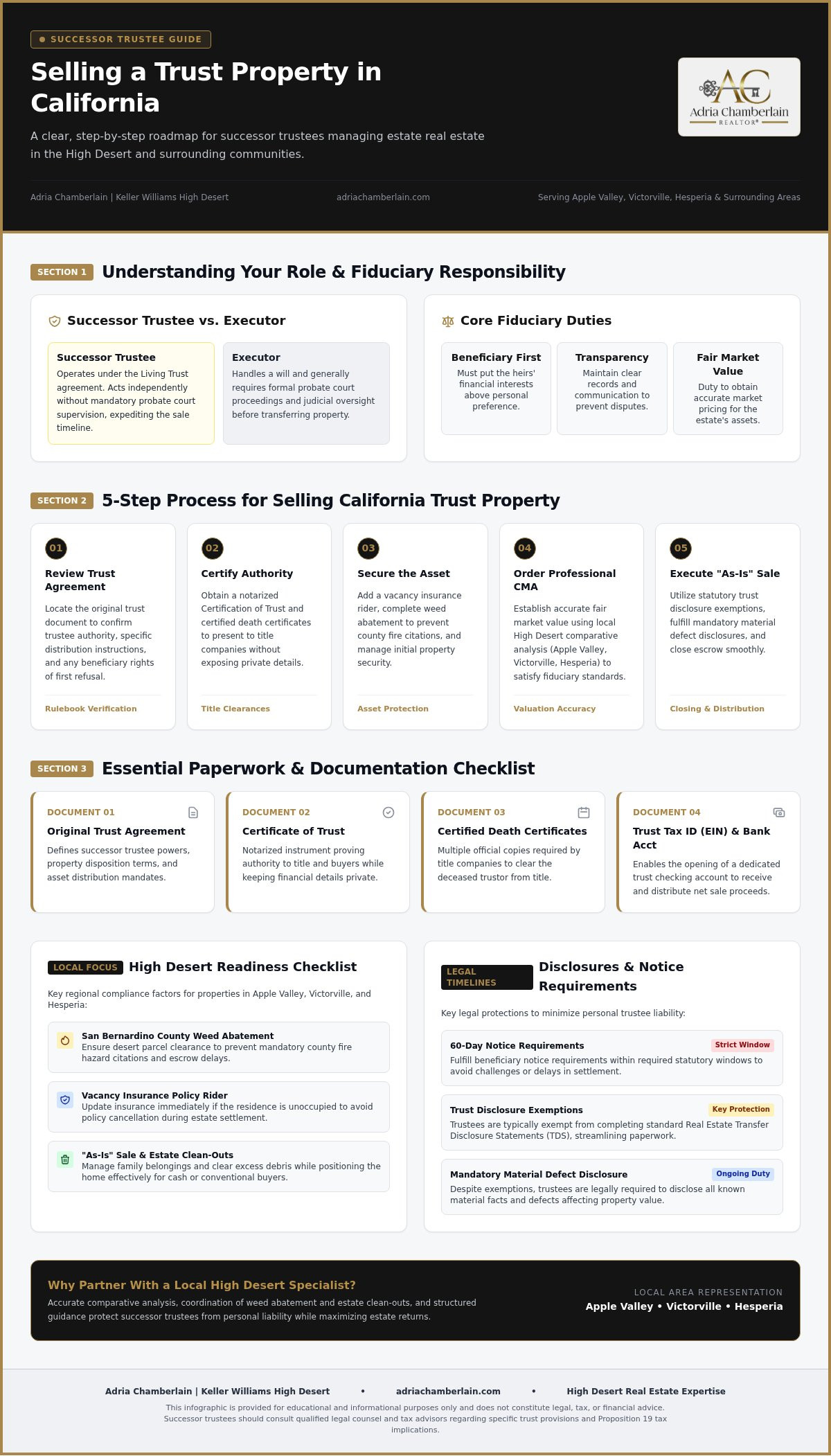
While the legal weight of the role can feel heavy, the actual process of selling a trust property California follows a logical set of steps. I always recommend starting with a thorough review of the original Trust Agreement. This document is your rulebook; it contains the specific instructions left by the trustor, such as whether the property must be sold by a certain date or if specific beneficiaries have a right of first refusal. If you're unsure how these instructions differ from a standard will, the California Courts estate and probate guide offers a helpful overview of how these legal paths diverge.
Next, you'll need to obtain a Certification of Trust. This notarized document proves your authority to title companies and buyers without revealing the private details of the trust's assets or beneficiaries. Once your authority is established, it's vital to secure the property. In our High Desert climate, this means more than just locking the doors. You should check that the insurance policy has a vacancy rider and ensure that weed abatement is up to date to avoid San Bernardino County fire hazard citations. When you're selling a trust property California, having these localized details handled early prevents delays in escrow.
Establishing the right price is your next priority. To fulfill your fiduciary duty, you should order a professional home valuation Victorville CA. This provides an accurate Comparative Market Analysis (CMA) based on recent local sales in neighborhoods like Apple Valley or Hesperia. This ensures you aren't leaving money on the table for the beneficiaries while setting a realistic expectation for the time on market.
Essential Paperwork for a Trust Sale
Beyond the trust document, you'll need several certified copies of the death certificate. These are required by the title company to clear the previous owner's name from the deed. You may also need to apply for a federal Tax ID (EIN) for the trust. This allows you to open a trust bank account to handle sale proceeds and pay estate expenses. If these requirements feel daunting, I can help you organize your files so nothing is missed during the transaction.
Managing Beneficiary Expectations
Transparency is the best way to prevent family disputes. Under California Probate Code Section 16061.7, you must serve a formal notice to all beneficiaries and heirs within 60 days of the trust becoming irrevocable. Providing regular updates on the listing status and offer amounts keeps everyone on the same page. I find that when beneficiaries see a clear, professional plan, it lowers the emotional temperature for everyone involved. If you need a partner to help communicate the market reality to heirs, feel free to reach out for a personalized trust sale consultation.
Trust Sale vs. Traditional Sale: Key Legal Differences
When you're selling a trust property California, you'll quickly notice that the rules feel different than when you bought your own home. In a traditional sale, the owner has lived on the property and knows every creak in the floorboards. As a successor trustee, you might be managing a home you haven't stepped into for years. This distance is why California law provides specific frameworks for these transactions. Your authority to move forward is grounded in California Probate Code Section 16226, which explicitly allows a trustee to dispose of trust real estate through a private or public sale.
Title insurance also requires extra attention. The title company must verify that the trust is the clear owner of record and that you are the person authorized to sign the deed. While trust sales move much faster than probate since there's no court confirmation, they require more administrative care than a standard sale. I work closely with title officers to ensure all documents are in order early so your closing timeline remains on track. This proactive approach prevents the common last-minute delays that can frustrate beneficiaries.
Understanding Disclosure Exemptions
The most significant legal difference involves the disclosure process. Under California Civil Code § 1102.2(d), most fiduciaries aren't required to complete the standard Transfer Disclosure Statement (TDS) or the Seller Property Questionnaire (SPQ). This is a vital protection. You can't legally attest to the condition of a home you haven't lived in. However, this isn't a total pass on transparency. You're still legally obligated to disclose any "known" material facts that affect the property's value or desirability. I help my clients use the Exempt Seller Disclosure (ESD) form to record these facts accurately and transparently, ensuring you meet your legal duties without overstepping.
Managing Liabilities and Risks
Selling a property "As-Is" is common in trust sales, but it doesn't mean you should leave buyers in the dark. In fact, over-promising on the property's condition is a mistake that can lead to personal liability. I suggest a proactive approach to protect yourself and the estate. First, order pre-sale inspections. Having professional home and pest reports available upfront reduces your risk and prevents buyers from renegotiating during escrow. Second, clearly state the home is being sold by a trustee who hasn't occupied the property. This sets the right expectations from day one. Finally, avoid DIY repairs. Unless it's a minor safety issue, it's often better to sell the home in its current state rather than risk a sub-par repair that creates a future dispute. By focusing on these protective steps, you can attract competitive offers while fulfilling your duty to the beneficiaries.
Preparing a High Desert Trust Property for the Market
Selling a trust property California often involves more than just a sign in the yard. In communities like Apple Valley, Victorville, and Hesperia, the physical condition of the home can vary wildly. As a trustee, you have to decide how much work to put in before listing. I start by helping you assess whether the home needs a full deep clean or if certain repairs will actually increase the final payout for the beneficiaries. This is where a comparative market analysis High Desert becomes your most valuable tool. It shows exactly what buyers are paying for in your specific neighborhood.
The "Clean-Out" process is often the most emotional hurdle. Many trust properties are filled with a lifetime of memories and belongings. I've found that coordinating an estate sale or a professional hauling service early on allows us to show the home's true potential. My role is to help you manage these logistics so you don't have to spend your weekends clearing out a garage in the desert heat. It's about clearing the path for a smooth transaction while respecting the history of the home.
High Desert Market Trends for 2026
Current data for late 2026 shows that the High Desert remains an affordable haven compared to the rest of the state. While the California statewide median price has climbed to approximately $914,810, homes in Victorville are sitting between $427,000 and $455,000. This price gap keeps demand steady. However, homes are currently averaging between 49 and 75 days on the market. This means day-one pricing is critical. If a trust property needs cosmetic updates, we have to price it strategically to attract the right buyer pool, whether that's a first-time buyer looking for a deal or a local investor.
The Logistics of a Vacant Trust Home
Managing a vacant home in Adelanto or Barstow comes with unique challenges. Security is a top priority, and I often suggest simple steps like setting light timers or ensuring neighbors know the home is being monitored. You also have to stay on top of San Bernardino County fire hazard regulations. The county requires weeds to be cut to four inches or less, and they only give you 30 days to comply once a notice is issued. I can help oversee property access for vendors, from swamp cooler maintenance to weed abatement teams. If you're feeling overwhelmed by these details, you can contact me for a property walkthrough to get started.
How Adria Chamberlain Facilitates a Smooth Trust Sale
Stepping into the role of successor trustee often means managing a complex transaction while you're still processing a personal loss. I believe my most important job is to provide a steady, calm presence that keeps the process moving forward without adding to your stress. Selling a trust property California requires a delicate balance of legal compliance and local market savvy. I take pride in being a protective leader for my clients, ensuring that every decision is made with integrity and transparency to protect the trust’s assets and your own peace of mind.
My background as a probate real estate agent High Desert specialist means I'm intimately familiar with the specific documentation and procedures required for these sales. I don't just put a sign in the yard; I create a customized marketing plan designed to reach qualified buyers who understand the nature of a trust sale. By focusing on clear communication and meticulous paperwork, I help you avoid the common pitfalls that lead to family disputes or legal delays.
Personalized Advocacy for Successor Trustees
I treat every transaction with a "real people first" mindset. This means I tailor the sale process to meet the specific needs of your family and the beneficiaries. I handle the complex coordination between title officers, escrow agents, and your legal counsel so you aren't stuck playing phone tag between different offices. Whether the property is in Apple Valley or Phelan, I act as your local advocate, ensuring that every detail is handled with the care it deserves. My goal is to make the administrative side of the sale feel manageable so you can focus on your family.
Your Next Steps: Scheduling a Consultation
The path to a successful sale starts with a simple, no-pressure conversation. I offer initial consultations to discuss the trust’s specific goals and provide a professional assessment of the property’s current market value. This initial meeting is a chance for you to ask questions about the process without feeling rushed or pressured. If you're managing the estate from a distance or need help moving family members out of the area, I also provide High Desert CA relocation services to make the transition smoother. When you're ready to start, I'm here to offer the personalized guidance you need to fulfill your duties with confidence.
Moving Forward with Confidence and Clarity
Being a successor trustee is a significant responsibility, but it doesn't have to be a source of stress. By understanding the specific disclosure exemptions and following the legal timelines we've discussed, you're already ahead of the curve. Remember that selling a trust property California is about more than just a transaction; it's about honoring a legacy and looking out for the beneficiaries' best interests. Whether you're navigating the "As-Is" sale process in Apple Valley or coordinating an estate clean-out in Victorville, having a steady hand to guide you makes all the difference.
I'm here to handle the complex paperwork and local market strategy so you can focus on what matters most. As a licensed REALTOR® (DRE 02032478) affiliated with Keller Williams Victor Valley, I specialize in these complex High Desert probate and trust sales. I'll provide the personalized advocacy you need to protect the estate's value while keeping every family member informed. I invite you to contact Adria Chamberlain for a Personalized Trust Sale Consultation to discuss your specific goals. You've taken the first step by educating yourself, and I'm ready to help you finish the journey with peace of mind.
Frequently Asked Questions
Do I need a lawyer to sell a house in a trust in California?
You aren't legally required to hire a lawyer to sell the property, but it's often a wise choice to ensure you're following the California Probate Code correctly. A trust attorney can help you issue the required 60-day notices and interpret complex trust language. While I handle the real estate logistics and marketing, I always suggest consulting a legal professional to protect yourself from personal liability and family disputes.
How long does it take to sell a trust property compared to a regular home?
The timeline for selling a trust property California is usually very similar to a traditional sale because you don't need court confirmation like you would in probate. Once you have your Certification of Trust, the listing and escrow process follows the standard market pace. In our current High Desert market, homes are averaging 49 to 75 days on market, though your specific community and property condition will influence the final timeline.
Can a Successor Trustee sell the house for less than market value?
Selling for significantly less than market value is generally risky because you have a fiduciary duty to act in the beneficiaries' best interests. If you accept a low offer without a valid reason, heirs could potentially hold you liable for the difference. I provide a professional Comparative Market Analysis (CMA) to help you establish a fair price that satisfies legal requirements and maximizes the return for the trust.
What disclosures am I required to make as a trustee in California?
While fiduciaries are often exempt from the standard Transfer Disclosure Statement (TDS), you must still disclose all known material facts about the property. This includes any defects or issues that could affect the home's value or desirability. I guide my clients through using the Exempt Seller Disclosure (ESD) form to ensure you're being transparent while staying within the specific legal protections provided to successor trustees in California.
Can I sell a trust property "As-Is" in the High Desert?
Yes, selling "As-Is" is very common for trust properties in communities like Apple Valley and Hesperia. This means you won't be making major repairs before the sale. However, you still have to meet local safety requirements, such as smoke detector compliance and weed abatement for fire safety. Selling in its current state is often the most practical choice for trustees who haven't lived in the home recently.
Who pays the real estate commission in a trust sale?
The trust estate typically pays the real estate commission out of the proceeds from the sale at the close of escrow. This is an administrative expense of the trust, much like paying for a final utility bill or property taxes. You don't have to pay these fees out of your own pocket. The commission covers the professional listing services, marketing, and the coordination of the entire transaction from start to finish.
Do all beneficiaries have to agree to the sale of the house?
Generally, the Successor Trustee has the legal authority to sell the property without a unanimous vote from the beneficiaries, provided the trust document allows it. However, you must still follow the 60-day notice requirements to keep everyone informed. Maintaining open communication helps prevent disputes. If the trust agreement has specific instructions about heir approval, those rules will override the general power to sell that a trustee usually holds.
What happens if the trust document doesn’t explicitly say I can sell the house?
If the trust is silent on the power of sale, California Probate Code Section 16226 usually grants trustees the statutory authority to dispose of trust real estate. Most modern trusts include broad powers that cover selling assets to distribute funds to heirs. If you're facing an older or poorly drafted document, it's essential to have a trust attorney review it. I can work with your legal counsel to ensure the title company is satisfied.


